Seattle native Patricia Wood knows how winning a lottery can change a life. Her father won $6 million in 1993 in the Washington lottery.
She also knows about the mentally disabled from having a former brother-in-law with Down syndrome, from working as a teacher and now as a Ph.D student at the University of Hawaii, focusing on education, disability and diversity.
She has taken elements of those experiences to write her first novel, "Lottery," about an Everett man, Perry Crandall, with an IQ of 76 who wins $12 million in the Washington lottery.
"I wanted him to be termed 'different' but embroiled in a situation that could conceivably happen to anyone," Wood says.
Perry L. Crandall is not "retarded," as he repeatedly explains to anyone willing to listen. But he is, as he readily admits, "slow."
"You have to have an IQ number less than 75 to be retarded," he insists. "Mine is 76."
Perry is the narrator of the novel, in which he recalls what happened to him, his family and his circle of friends when he won the big jackpot. It isn't pretty — and the book sometimes errs on the simplistic side in showing how ugly it gets.
What it does have going for it is the striking nature of Perry's voice, and the sharpness of Wood's eye for certain colloquialisms that Perry has to struggle to grasp.
Key among them: "Vultures are animals, but they can be people too."
As the book opens, Perry is living with his grandmother and working for a marine-supply store on the Everett waterfront. Perry and his Gram are devoted to one another, but plain-spoken Gram worries about what will happen to her grandson after she dies.
"You're so goddamned suggestible," she says. "Suggestible and honest! A terrible combination!"
Gram promptly dies, Perry wins the $12 million, and the "vultures" immediately descend. They consist of Perry's mother, Louise, who long ago abandoned him, and his brothers John (a shady lawyer coping with money deals gone wrong and an excess of ex-wives needing alimony) and David (a failed-lawyer-turned-accountant with a lawyer-wife whose greed for cash exceeds even John's). Louise, unlike John and David, has no great scam in mind — she just wants Perry to write her checks as often as possible.
Batting in Perry's corner are his boss, Gary, and his co-worker Keith, a boozy Vietnam vet whose own life has taken some bad turns. They're aware that Perry's family are out to swindle him — but they aren't sure what to do about it. Rounding out the cast is Cherry, a young punkette cashier at the Marina Handy Mart near Perry's workplace who catches his eye but whose heart may be committed elsewhere.
John, David, Louise and company are such one-note villains that they make for surprisingly dull reading, even as they scheme. The vulgar but goodhearted Keith is more lively but sends the novel in a sentimental and ultimately melodramatic direction that some readers may find cloying.
What really works here is Perry and the way he sees things, from certain oddities of the English language to certain aspects of the behavior of those around him. His Gram always pushed him to overcome his condition, and one way he does this is to work his way through the dictionary. Result: He's unusually alert to what seemingly innocuous words can really mean.
"Vacations," he notes when dealing with an impatient customer, "are when you stop being in a hurry to go to work and start being in a hurry to go someplace else."
"Arrangements," he observes when he and his brothers are working out the details of Gram's cremation, "are something nobody wants to do, and cost money nobody wants to spend."
Wood, who grew up in Seattle and is now working on a Ph.D. at the University of Hawaii in education, disability and diversity, brings a solid background to Perry's cognitive impairment. She also draws on her observations of her father's experience of winning $6 million in the Washington State Lottery in the book.
But there's more going on here than just giving readers some inside scoops on the world of lottery winners and the mentally challenged.
"Lottery," thanks to the stylistic constraints Wood puts on herself throughout the novel, also serves as a reminder that simple declarative sentences can do the trick in evoking a highly unusual view of the world — Perry's view.
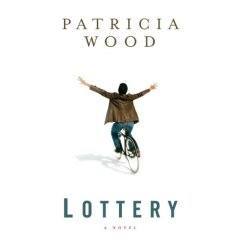
The novel is published by Putnam's Sons, New York, and is 311 pages in length.
The hardcover is listed at $24.95, but is available at a 34% discount to Lottery Post readers by clicking the book image below.
You don't have to be slow to be cheated. My grandfather inherited a meat packing business and his mother had him sign it over to her by claiming he had to sign a form to receive the inheritance. By all accounts, she was rotten to the core.
Quote: Originally posted by jeffrey on Aug 14, 2007
You don't have to be slow to be cheated. My grandfather inherited a meat packing business and his mother had him sign it over to her by claiming he had to sign a form to receive the inheritance. By all accounts, she was rotten to the core.
I've seen people cheated and lied to for years in many different businesses. Whether I was working at a car dealership, a retail store or an insurance company, what drove me crazy was that the salespeople go home to their families at the end of the day and don't even realize they've done anything wrong. Like men in Death Squads they were "just doing their jobs."
BTW, I want to add that there are also a lot of very honest salespeople, even some who sell used cars!
In the lottery even a child can win millions...In a way when they show the movie "Charlie and the Chocolate factory" to me that was a form of lottery though it was more in the form of a scratch-offs...
i would love to see this book turned into a movie......another good movie about lottery winners is the movie""""IT CAN HAPPEN TO YOU """"... it was with nicklis cage and rosey perizza..





i think this happened in new york once. the winner was mentally disabled and i think his family member had to help him claim it.
I hope Mr. Crandall doesn't have financial problems later in life. Did he pick cash option?
Something tells me you're right!
THANK'sssssssssssssssssssssssALL&&&&&&tnlotto1>>>>>TOO!!!!!!
PSYKOMO!!!!!!!!!!!!!!!!!!!!!!!!!!!!!!!!!!!!!!!HE thinks it's GREAT
Hope all on the LP will enjoy the book>>>>>>>>and MOVIE too!!!!
Can't wait for the MOVIE......................................................!!!!!!!!
LOL
PSYKOMO
You don't have to be slow to be cheated. My grandfather inherited a meat packing business and his mother had him sign it over to her by claiming he had to sign a form to receive the inheritance. By all accounts, she was rotten to the core.
There already was a movie called "The Lottery". It was about a human sacrifice. Same story I think.
BTW, I want to add that there are also a lot of very honest salespeople, even some who sell used cars!
From the OP:
"Gram promptly dies, Perry wins the $12 million, and the "vultures" immediately descend."
The "vultures" are going to be the case regardless of your IQ!
This book might be a good read.
In the lottery even a child can win millions...In a way when they show the movie "Charlie and the Chocolate factory" to me that was a form of lottery though it was more in the form of a scratch-offs...
i would love to see this book turned into a movie......another good movie about lottery winners is the movie""""IT CAN HAPPEN TO YOU """"... it was with nicklis cage and rosey perizza..
It is not uncommon for people with a low I.Q. to win the lottery. In fact that seems to happen the majority of the time...