truesee's Blog

Man serving triple life sentence mistakenly released from prison

Prison officials mistakenly release attempted murder convict

N.Y. man serving triple life sentence freed from downtown Baltimore facility

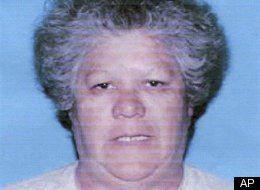
Raymond Taylor

Raymond Taylor (Handout photo / February 25, 2010)


Justin Fenton
Baltimore  Sun
5:30 p.m. EST
February 25, 2010


State prison officials said a 26-year-old New York man serving a triple life sentence for attempted murder was accidentally released from a downtown Baltimore prison Thursday.

Officials said Raymond Taylor, who was sentenced to life in prison on an attempted first-degree murder charge in 2005, was erroneously released at 2 p.m. from the Maryland Correctional Adjustment Center. The Baltimore Sun reported at the time that Taylor tried to kill his ex-girlfriend and her two daughters at their Pentland Drive home in Northeast Baltimore.

Taylor pleaded guilty to shooting Tammie Johnson and her teenage daughters, Cierra Johnson and Shatera Brooks. Each was shot multiple times in the head and body with a .22-caliber handgun, prosecutors said.

Taylor was arrested in New York City days after the shooting, police said. The victims survived but have had multiple surgeries.

Anyone with information on Taylor's whereabouts is asked to immediately call 911. The Internal Investigative Unit of the Maryland Department of Public Safety and Correctional Services is assisting law enforcement with the case and is conducting an investigation into the circumstances of Taylor's release.

Correctional services spokesman Mark Vernarelli said it was unclear how Taylor was released.

"We're working as hard as we can to find out," he said.
Entry #1,838

Man has shootout with police over parking space

Hill District man's shots at police called shock

Neighbors describe suspect as friendly

Thursday, February 25, 2010

Sadie Gurman and Moriah Balingit

Pittsburgh Post-Gazette


The last time Lois Watson spoke with Errol Parker Sr. she was headed for a cruise and asked him to look after her house.

"He said, 'Sure, I'd be glad to,' " Ms. Watson said Wednesday, stunned that the man who had been so neighborly was charged in a gunfight with police, just outside her door. Police said he punched a neighbor who asked him to move his car, then swapped gunfire with police officers who responded to the call.

They said Mr. Parker, 61, hid in his house on Ewart Drive in the Hill District, shot at officers who demanded he surrender and was finally subdued with a jolt from a Taser in a struggle that drew neighbors to their porches Tuesday night.

Mr. Parker, an automotive mechanic for Port Authority working in Manchester, was charged with assault on a police officer, attempted homicide and assault. He was placed on leave from his job with pay pending further investigation.

It was not the kind of behavior Ms. Watson said she would expect from Mr. Parker, whom she didn't know well but who never caused her trouble.

"I was shocked," she said. "It's ridiculous. I'm surprised this happened over a parking space."

Police said they had not been called to Mr. Parker's home before, and Allegheny County court records shows he does not have a criminal past.

There is parking on just one side of the 3100 block of Ewart Drive, and it was lined with cars Tuesday night. About 7:30 p.m., Mr. Parker's upstairs neighbor, Lee Allen Smith, asked him to move his vehicle. Mr. Smith told police he had dug snow out of the space so his girlfriend could park there, and Mr. Parker had moved his car when he asked the night before.

"On this particular evening, he became enraged," police Assistant Chief Maurita Bryant said.

The two argued before Mr. Parker punched him in the jaw, police wrote in a criminal complaint. Mr. Parker then pulled a pistol from behind his back and told Mr. Smith, "I will lay you out," according to the complaint.

Officers Bill Kelsch and Thomas Gorecki arrived about 7:45, and knocked on Mr. Parker's door, announcing themselves as police when he wouldn't respond. Officer Gorecki said he could hear walking in the house, and the officers began calling for him to come out over a loudspeaker, the complaint said.

Officer Kelsch discovered the door was unlocked and opened it, to find Mr. Parker walking toward them from a hallway with a drawn gun. The officers yelled at him to drop the gun, but Officer Kelsch could see him standing in the hallway, pointing the gun at him, the complaint said.

"In fear of being shot, I immediately fired one round from my pistol," the officer wrote. Mr. Parker ducked out of sight but did not drop the gun.

Instead, the complaint said, he "charged forward in the hallway" and fired a shot at Officer Kelsch, who returned two shots at Mr. Parker. Mr. Parker's bullet missed the officer, striking the wall he was using to take cover.

Mr. Parker then retreated to a back room, "yelling unintelligible" statements at the officers, police said, then announced that he had put the gun down and wanted to surrender. Officers ordered him out of the room and onto the ground. They stunned him with a Taser when he did not comply, and he struggled against them as they tried to put him in handcuffs.

Officers recovered two pistols and shell casings in a dining room doorway, the complaint said. Police said Mr. Parker fired at the officers with one of the guns and that it may have jammed, preventing him from firing more shots.

Officer Kelsch will not be placed on administrative leave because no one was injured, Chief Bryant said. Mr. Parker remained in the Allegheny County Jail Wednesday night.


LINK TO PHOTO:

Read more: http://www.post-gazette.com/pg/10056/1038476-53.stm?cmpid=localstate.xml#ixzz0gXlplOjm

Entry #1,836

PETA plans Tiger Woods billboard

PETA plans Tiger Woods billboard in Windermere

Ad promotes spay-and-neuter for pets

PETA announces billboard featuring Tiger Woods PETA announces billboard featuring Tiger Woods (PETA)


Eloísa Ruano González

Orlando Sentinel

6:15 p.m. EST, February 24, 2010

Animal-rights group PETA plans to unveil within the next few weeks a "cheeky spay-and-neuter" billboard featuring Tiger Woods — without the golfer's blessing.

The People for Ethical Treatment of Animals is searching for a local advertiser to put up a billboard in Windermere, which will include an image of Woods and text: "Too Much Sex Can Be a Bad Thing....For Little Tigers Too. Help Keep Your Cats (and Dogs) Out of Trouble: Always Spay or Neuter!"

It will be a challenge to find an advertiser to put up the sign, acknowledged Virginia Fort, a campaigner with PETA who is working on the project.

"It's a fun, tongue-in-cheek approach. We hope these billboard companies will understand," Fort said.

She said the billboard isn't meant to offend the golfer, his family or fans, but to prevent millions of cats and dogs from being euthanized at shelters each year.

"The world has been transfixed on Tiger's life after Thanksgiving. We're putting the focus where it needs to be," Fort said.

It's uncertain when the billboard would go up in Windermere but "the soonest would be in two weeks," she said.

Woods is not affiliated with PETA and has not endorsed the ad, Fort said.

"We're sure Tiger will appreciate our attempt — from a story that's distracted the world and followed Tiger — to turn it into something positive for little tigers," she said.

Woods' attorney, Mark NeJame, declined to comment. The golfer's agent, Mark Steinberg, and spokesman, Glenn Greenspan, did not return phone calls seeking comment.

Entry #1,835

Watch this movie and win $10,000?

Watch this movie and win $10,000?

NEW DELHI

Tue Feb 23, 2010

10:28am EST 

NEW DELHI (Reuters) - A Bollywood filmmaker has issued a lucrative challenge to horror movie fans: a $10,000 reward for anyone who can watch his latest supernatural thriller, alone, in a cinema until the closing credits.

Ram Gopal Varma's "Phoonk 2," a sequel to his 2008 film of the same name, is about an evil spirit that traumatizes a family. "Anyone who says the movie cannot scare him is going to be put in a theater by himself," Varma told reporters in Mumbai at an event to promote the movie.

Varma said the film fan who steps up to the challenge will be wired up to a heart monitoring machine as well as a camera that ensures they keep their eyes open during the whole movie.

Readings from the machines will be shown live on a screen outside the cinema, Varma said, and if the contestant succeeds, they will win 500,000 rupees (approximately $10,850).

Varma issued a similar challenge ahead of the release of the original "Phoonk" but the promotional contest was withdrawn after allegations the selection process was rigged.

Varma said the contest winner ran out 30 minutes after the film started, but newspaper reports said a film fan in the southern Indian city of Bangalore booked an entire cinema to prove the director wrong and watched the film alone with a doctor on call and security personnel stationed outside(Writing by Tony Tharakan, editing by Miral Fahmy)

Entry #1,833

Woman sold 2 children for $175 and a bird

Donna Louise Greenwell Charged With Selling 2 Children For $175 & An Exotic Bird

MARY FOSTER | 02/23/10 03:51 PM | AP

Bird Children Swap

NEW ORLEANS — A Louisiana woman has pleaded guilty to selling two children for a <snip>atoo and $175 in what her attorney called an attempt to do a good thing that went wrong.

"It was a really clumsy attempt at an adoption proceeding," said Steve Sikich, attorney for Donna Louise Greenwell of Pitkin. "She was trying to help the children and get them situated."

Greenwell, 53, was sentenced Monday to 15 months of hard labor on each of two criminal counts: sale of a minor. The sentences are to run concurrently.

The case centered on a 5-year-old boy and a 4-year-old girl in Greenwell's custody.

Investigators said she called Paul J. Romero, 46, and Brandy Lynn Romero, 27, of Evangeline Parish early last year after seeing a flyer they posted offering a <snip>atoo for sale, and offered to deliver the children for about $2,000. When the Romeros said they could not afford that, a deal was stuck for the bird, valued at $1,500, plus cash.

Greenwell had custody of the children for more than a year before meeting the Romeros, Sikich said. Her lawyers have maintained she was just trying to find a better home for them.

"They were undernourished and not well taken care of," Sikich said. "It's my understanding that the mother had requested that she take care of the kids."

Another lawyer for Greenwell had said previously that the children were "abandoned to her care."

Neither the children's mother or father could be located, Sikich said.

The $175 was to cover the cost of an attorney to transfer custody of the children to the Romeros, Sikich said. The <snip>atoo was a gift to Greenwell's granddaughter, he said.

Greenwell's sentences were part of a plea deal worked out with the Evangeline Parish District Attorney's office.

Sikich said Greenwell could have faced up to 10 years on each count and another 20 years as a habitual offender. The district attorney agreed not to file charges against Greenwell as a habitual offender as part of the plea bargain, Sikich said.

"She did not have a good attorney for two previous counts, which left her with a record she didn't really deserve," he said. He said the charges were for issuing worthless checks and second-degree battery.

The Romeros, of Eunice, pleaded guilty to two felony counts of sale of a minor child, the district attorney said in an earlier statement. Their five-year prison sentences were suspended in exchange for their testimony against Greenwell, the statement said.

The district attorney's office did not return repeated calls Tuesday for comment.

Greenwell will begin serving her sentence on March 25.

Entry #1,832

Teenage burglars accidentally dials 911

Teenage burglary suspects call 911 on themselves

Gary Taylor

Orlando Sentinel

4:01 p.m. EST, February 23, 2010


If you accidently hit a button on a cell phone, you're likely to dial a number.

It could be the last number you called on that phone or maybe the first number in your address book.

Or, as two Palm Coast teenagers found out the hard way, it could be 911.

An inadvertent call to the 911 dispatch center was received about 1:45 a.m. Sunday. Dispatchers listened as two females talked about breaking into vehicles in the area of the Lollipops night club.

They sent Daytona Beach officers to the 600 block of Glenview Avenue. They arrived in an unmarked vehicle and spotted a 13-year-old girl inside a vehicle. She ran, but was caught when she reached her friend's vehicle which was parked in the same lot.

Both were taken into custody.

The 13-year-old, whose name is not being used because of her age, faces a charge of burglary to a conveyance. Stefanie Vargas, 19, is accused of being a principal to burglary to a conveyance.

Entry #1,831

A job with a 1,000-mile commute

A job with a 1,000-mile commute

You grab an opening where you can

Updated: Monday, 22 Feb 2010, 6:35 AM CST
Published : Monday, 22 Feb 2010, 6:35 AM CST

SHARON COHEN

AP National Writer

In this Jan. 17, 2010 photo, Michael Hanley speaks about his weekly work commute at his home in Janesville, Wis. (AP Photo/Andy Manis)


JANESVILLE, Wis. (AP) - In the early dawn, after another week building cars, Michael Hanley leaves his job in Kansas. He quickly zips into Missouri, then heads up a ribbon of highway past grain silos and grazing deer, across the frozen fields of Iowa, over the Mississippi River and into the rolling hills of Wisconsin. Finally, he pulls into his driveway — 530 miles later.

It's one heck of a haul: more than 1,000 miles roundtrip, 16-plus hours of driving, every week.

"I like to say I gave up an eight-minute commute for an eight-hour commute," he says wearily, running a hand though salt-and-pepper hair as he watches his two sons play basketball for the first time this season.

After the aging General Motors plant where he worked for 23 years was idled about a year ago, Hanley faced a Hobson's choice: Stay with his family and search for an autoworker's salary ($28 an hour) in a county where more than 40 percent of its manufacturing jobs disappeared from 2006 to 2009. Or hang on to his GM paycheck and health insurance and follow the job, no matter where it leads.

In his case, it led to Fairfax, Kan., the same place his brother and two brothers-in-law — also GM workers, and now his roommates — landed. For others, it has been Indiana or Texas.

The long commute is not just a story of hard times, tough choices and a shrinking American auto industry. It's also a case study of what happens when an aging industrial town loses an anchor, when workers too old to start over and too young to retire are caught in a squeeze and when economic survival means one family, but two far-flung ZIP codes.

Hanley is not one to complain.

"GM has been good for us," he says. "This whole town knows that."

For 90 years, the sprawling plant — it started out building tractors — became a different kind of family business. Through the decades, sons followed fathers onto the line, sometimes rubbing shoulders as they built Chevy Cavaliers, Caprices, Tahoes, Suburbans and more.

Hanley's father and brother worked there. So did his father-in-law, two brothers-in-law and an assortment of uncles, cousins, nieces and nephews.

But as GM's financial troubles mounted, car and SUV sales fell and gas prices climbed, the automaker closed several plants, eliminating thousands of jobs.

Janesville — then the oldest of GM assembly plants — ended production of SUVs in December 2008, months before the automaker received billions of dollars in government loans and filed for bankruptcy. (The factory is on standby status; some hold out hope it will reopen one day.)

Some of about 1,200 remaining workers took buyouts or retired; some began new careers. Hundreds more stayed with GM, relocating, commuting or just waiting for an opening. The automaker has about 6,500 laid-off workers nationwide.

Even before the doors closed, Hanley began preparing for life after GM. He returned to college to complete two credits he needed for an accounting degree, but an offer in Kansas came first.

He didn't hesitate. Auto work these days is like playing musical chairs. You grab an opening where you can.

Hanley didn't want to lose his health insurance while his wife, Laura, was receiving costly chemotherapy treatments for a blood disease that will likely lead to cancer. The medical bills last year, she says, were in the tens of thousands of dollars.

"There's no way I could possibly go through one treatment without him having insurance," she says.

Like many other divided GM families, the Hanleys decided even though the job was important, there were reasons not to uproot everyone: Laura works at their sons' Catholic school, the boys are immersed in band, Scouts, basketball and church, and the sale of a house was an iffy and perhaps money-losing proposition.

Hanley knew it would be a trade-off — financial security for a lonely existence.

His eyes mist as he talks about what he misses: dinner with his family, coaching basketball, going to the YMCA with his boys, wrestling with them at night, attending their concerts and games, watching them grow up.

"It's an adjustment, not being home," he says. "I probably sounded cruel because I said I wouldn't miss my wife as much because she's going to be there when I come back, when I retire. But those years with the kids aren't going to be there. That's the hard part, not being able to be around them. ... I don't know if I really appreciated it before."

Hanley plans to commute another 18 months, until he turns 50, hoping for a retirement package then — something, he says, he "prays about every night."

Laura, meanwhile, does double duty as a single parent. It's all overwhelming — working, shuttling her sons around, keeping an eye on her elderly mother and worrying about her husband's long commutes.

"The kids are tired of seeing mom cry because she's stressed and seeing dad cry when he needs to go back to work," she says. "We're really close — the four of us. You can't talk to a lot of people, either. They have no sympathy. They say at least he's working."

And that's nothing to take for granted in this southern Wisconsin county where unemployment has been in the double-digits for more than a year.

For every one of about 4,500 GM and auto supplier jobs that disappeared, another was lost outside the industry, says Bob Borremans, head of the Southwest Wisconsin Workforce Development Board. The ripple effect was enormous: About 9,000 of the county's 75,000 jobs vanished.

The plant, itself, had long been a polarizing presence in the community, he says.

"Because of the benefits, the working conditions, the pay ... it was THE coveted job in the area," he explains. "In many cases, people, because of who they knew, were able to walk in and get a job there. That created animosity."

"There are those people who worked there who have lost something they thought would be around forever and provided them with a real good lifestyle," he adds. "But there are others, I would say, who were jealous of folks who had that opportunity. And they don't have a lot of sympathy for the stress the (GM) people are feeling these days."

After seven months of commuting, Brad Morrison measures his world in numbers.

—169,000 miles: The odometer reading on his 2002 Silverado.

—$180: The cost of gas for weekly trips between Fairfax (just outside Kansas City) and Wisconsin.

—Six years, two months. That's when Morrison will have 30 years at GM and can retire with a full pension. He'll be 49 then.

Morrison started at GM as a teen, married his high school sweetheart, Sarah, and they had three children. With "two in college and one in braces," he says, he didn't consider changing careers.

"I'm kind of trapped now," he says.

With his shock of white-blond hair, Morrison looks a decade younger than 43 but says 24 years of stooping, lifting car parts and standing have taken a toll — three surgeries on his knees, one on his left shoulder, another on his left wrist.

Now, he says, there's a grueling Monday to Friday work schedule, heading home at 2:40, arriving around 10 p.m., often too wired to sleep. On Saturdays, it's reconnect-with-the-family time. And that can mean more driving: His 15-year-old son's recent choral competition put him on the road five more hours one Saturday.

On Sundays, he heads back at about 1 p.m. — 39 hours after arriving.

"I'm worn down," Morrison says. "You never get any rest. You're always on the move. ... It's hard to have a family life or marriage. Try to be a husband or father at 500 miles away."

He never considers skipping a weekend. "I don't know how a wife or kids can be too much of a hassle," he says. "The hassle is just not having them with me."

Morrison and his wife, a school aide, talk several times a day. In between, they text each other with endearing "I miss you" and "I love you" messages. "We're hopeless romantics," he says. She concurs: "He's my best friend."

But living apart is more than an emotional strain. It's expensive, too.

Morrison refinanced his house to free up more money for monthly expenses that include gas — $720 when he drives alone — and $425 in rent and utilities for an apartment he shares with another Janesville transplant. (GM, in many cases, provides some compensation for workers who relocate.)

But this is just temporary.

The Morrisons decided they don't want to live this way; they plan to sell their Wisconsin house and Sarah and their youngest son, Austin, will move when the school year ends.

Though they'll be together, Morrison doesn't feel secure.

"This plant is no safer (from downsizing) than any other," he says. "I don't take my job for granted anymore. ... Do I regret working for them? No. It's good money. It was a good company back then. It still is."

"The auto industry is a lot like a roller coaster," he adds. "When the going is good and you're at the top, everything is boom. When it's times like this, you're at the bottom. But I still feel fortunate even to be there. I can still hold on. And I count my blessings for that."

John Dohner can be forgiven if he has that feeling of deja vu when he pulls into the parking lot of the GM plant outside Fort Wayne, Ind.

He has been there before. Decades ago.

Then a fresh-faced 20 year old, Dohner moved from Janesville to Indiana, following his job building pickup trucks. He returned to Janesville when a spot opened seven years later.

Now he's reversing course as a 44-year-old family man with a wife, three kids (21, 17 and 15), a house, a 13-acre farm and a good life almost 300 miles and one time zone away — a life he's not about to abandon.

Ditto for his job.

"I'm not going to walk away," he says. "I'm not giving them the satisfaction of giving them 25 years of my life and not get anything in return."

Like others, he has his eye on the prize: the 30-year finish line.

Dohner is among dozens of Janesville commuters who form a caravan every Saturday morning to make the 275-mile trek home. (He turned down a GM job in Kansas. The drive was too long, he said.)

Soon, one of his laid-off brothers will join him in Indiana; another still is waiting. Their father, John Sr., heads United Auto Workers Local 95.

With Dohner gone, his wife, Jane, has become skilled at everything from repairing water tanks to installing furnace filters. Her day starts at 4:45 a.m., when she and the kids feed the dogs, rabbits, cows, chickens and horses. The two boys take care of their dad's snow plow business. Dohner still keeps up his duties as chair of the tiny township (population 800), using vacation days to attend monthly meetings.

On Sundays, Jane gives her husband spaghetti casseroles, brownies and other dishes for the week, and waves goodbye.

It's much easier than last summer. She sat on the front porch and cried the first time he left. "You can't think of five years," she says. "I think I can't do it for so long. ... I just texted him Thursday night and said, 'This stinks.'"

But there seems no good solution.

"We built this place and worked so hard to get it to where it is, so do you want to leave?" she says, glancing outside at the tranquil snow-covered countryside where the dogs frolic and horses graze. "But some days," she says, "I think we should have all gone as a family."

Steve Kerl now knows about the rodeo, the Texas Rangers and traffic jams — all part of his new surroundings.

He works at the GM plant in Arlington, Texas. His home remains in Janesville, about 1,000 miles away, making it impossible to return more than a handful of times in the past year, though his wife, Kristy, and two children have visited.

When Kerl first drove down last March with his wife, they talked several times about turning around. He forged on, but his wife didn't like what she saw, so she returned home.

If it's any comfort, Kerl can look around the factory floor and see others who've picked up stakes, coming from Michigan, Tennessee, Missouri — and, of course, Wisconsin.

Kerl says he transferred to Texas because it was the only option then and auto jobs were fast disappearing. "I figured it would be better being on the inside looking out rather than the outside looking in," he says.

He wishes he could see his daughter's cheerleader activities and would have liked to have taken his son to college. "He's only going to be a freshman once," he says.

And yet, he's reluctant to gripe about his life.

"You can't put a negative spin on it and say you hate it. I'm working long hours, making good money," he says. "My kids' educations are being paid for. ... I can tell you right now that a lot of the people who took the buyouts are struggling now. They can't find a job anywhere."

It may get worse, too, this summer when health care and unemployment benefits expire for some former GM workers.

"I don't think the community has felt the entire blow yet," says the elder Dohner, the UAW local president. When the benefits are gone "and it's time to build roads and keep the schools open, everyone is going to realize there's a big, big hole."

Now 43, Kerl has seven more years to reach the 30-year milestone.

He doesn't expect he'll spend all that time in Texas. But that's fine.

"If they announced this plant was closing, I'd pack up my stuff and go to the next one," he says. "We'll get through it. I'm going to ride this to the end."


Entry #1,830

Man goes to church on a horse, intoxicated with a gun

Man arrested after disturbance at Casey church services


BEN KLEPPINGER and EMILY TOADVINE


Am News
February 22, 2010

ELLISBURG — A Casey County man was arrested for public intoxication Sunday shortly after creating a tense scene at Ellisburg Baptist Church by walking into the morning service with a holstered gun.

Donald Howard Goode, 43, of 3295 Ky. 78, was not arrested at the church, but was arrested at a residential home at 12:30 p.m., about an hour after the first call.

Pastor Jerry Adams’ wife, Cathy, said the preaching had already begun Sunday morning when Goode, who had a “grievance” with a member of the congregation, entered the church with a holstered gun on his side. Goode had traveled to the church on his horse.

“The way he was talking (about his grievance) didn’t make any sense,” she said. “It was real frightening for us as a church.”

Cathy Adams said several men who knew Goode very well went outside with him and convinced him to give up the holstered gun and a rifle he had brought on his horse.

Jerry Adams then talked with Goode, and told him he could stay for the service if he wouldn’t cause a disruption or bring his guns inside.

“We were trying to help the guy — (we) didn’t want him arrested or anything,” Cathy Adams said.

When Casey Sheriff’s Deputy Chad Weddle arrived, Goode was inside and gunless, and church members told Weddle they did not want him arrested.

“Some men in the church said they already got the gun from him. He was having some family issues. He was inside, crying, weeping,” Weddle said.

Goode lives close to the church and works for the father of one of the members, Weddle said.

State police also came to church

State Trooper William Gregory said state police from the Columbia Post also responded to the call of a man with a gun at Ellisburg Baptist.

“Any time we hear that, obviously that gives us cause for concern,” he said.

State police left after they were told by the pastor that everything was under control and the congregation would be able to handle the situation. Even if Goode had still been carrying a gun, there was nothing police could have done.

“He was at church with a gun in a holster on his side, which is not illegal,” Gregory said.

After the service, Jerry Adams attempted to talk with Goode and help resolve the situation, Cathy Adams said. But Goode wasn’t in a state of mind where you could reason with him, she said.

Details of what happened next are blurry, but Goode left the church and went to a residential property, where police were again called after he created a disturbance.

Weddle was in the middle of finding a meth lab on Dry Fork Creek in southern Casey County when he received the second call about Goode.

“They called back and said (Goode) went to a neighbor’s house,” Weddle said.

Kentucky State Police Trooper Bryan Shepard arrested Goode at the new location and he was lodged in the Casey County Jail on one charge of alcohol intoxication.

Goode was released Sunday evening on his own recognizance.

Entry #1,829

If you want to be big in talk radio bash Obama

Rush Limbaugh named top talk radio host by influential trade mag; 9 of top 10 are anti-Obama

David Hinckley
DAILY NEWS STAFF WRITER


Tuesday, February 23rd 2010, 12:15 PM


Rush Limbaugh (r.) was named the top talk radio host in the country by a respected trade magazine, with Sean Hannity (l.) and Glenn Beck. Diamond/WireImage; Corkery/News; Lovekin/Getty

Rush Limbaugh (r.) was named the top talk radio host in the country by a respected trade magazine, with Sean Hannity (l.) and Glenn Beck.

Rush Limbaugh remains the top dog in talk radio, says the influential trade magazine Talkers.

The magazine has just released its annual "Heavy Hundred" list – a reference to influence, not weight, and it praises Limbaugh as "the most-listened-to talk host and more relevant culturally than ever."

The top rungs of the list also confirm something that No. 2 talker, Sean Hannity, said on the eve of the 2008 Presidential election.  "I don't think it would be good for the country if Barack Obama is elected President," Hannity said. "But I have to say it would be great for talk radio."

Sixteen months later, the debate continues over Hannity's first point. There's no question he was right about the second one, because having a "bad guy" in the White House has sent a surge of electricity through the talk radio world.

The top four talkers - Limbaugh, Hannity, Glenn Beck and Michael Savage – have all been non-stop, full-time critics of pretty much everything about Obama except his shoelaces and his toothpaste.

The top 10 also includes non-Obama fans Laura Ingraham, No. 6, and Mark Levin, No. 8.

In fact, advice guru Dr. Laura Schlessinger (No. 5), and finance guys Dave Ramsey (No. 7) and Lou Dobbs (No. 9) don't much care for Obama, either.

Only Thom Hartmann, at No. 10, has had any encouraging words for the prez.

Talkers publisher Michael Harrison, a former morning host at WNEW-FM in New York, says the list is compiled on "courage, effort, impact, longevity, potential, ratings, recognition, revenue, service, talent and uniqueness."

He has repeatedly stressed that the list is subjective, "as much art as science."

While conservative talkers dominate the top of the list, this year's does have a growing presence of non-conservatives just below the top rung. Besides Hartmann, the top 25 includes Ed Schultz, Joe Madison, Alan Colmes and Stephanie Miller.

None have ratings approaching those of the top conservatives, but Talkers is clearly considering satellite radio, online listening and other non-traditional means of delivering the message.

Speaking of satellite, Howard Stern of Sirius XM comes in at No. 32, a big drop from his top-10 status when he was on terrestrial radio. Opie and Anthony of Sirius XM are No. 65.

WABC morning man Imus is No. 21, one notch below overnight "Coast to Coast" host George Noory, whose show recently was dropped by WABC.

Two hosts heard in New York on WNYM (970 AM) are in the top 25: Mike Gallagher at No. 19 and Michael Medvev at No. 23.

Curtis Sliwa, the new morning host at WNYM, is No. 87.

New York's two largest talk stations both are well represented in the top 100.

WABC (770 AM) has four of its five daytime hosts in the top 25: Imus, Rush, Sean and Levin.

Its other weekday hosts – John Batchelor, Doug McIntyre and Joe Scarborough/Mika Brezinzki – are all in the top 250. After ranking the top 100, Talkers lists another 150 hosts it considers important.

WOR (710 AM) has three top-10 hosts, with Beck, Savage and Dobbs. Dr. Joy Browne is No. 27, Steve Malzberg No. 56 and Joey Reynolds No. 76. Morning man John Gambling is in the top 250.

WWRL (1600 AM) has Hartmann, Schultz (No. 11), Colmes (No. 16), Miller (No. 24) and morning host Errol Louis at No. 90.

WFAN (660 AM) has morning team Boomer Esiason and Craig Carton at No. 35 and Mike Francesa at No. 48.

WEPN (1050 AM) has the Mike and Mike morning show at No. 43.

The Sunday "Open Line" team of Bob Slade, Bob Pickett and James Mtume of WRKS (98.7 FM) is in the top 250.


The top 25:


1. Rush Limbaugh 

2. Sean Hannity

3. Glenn Beck

4. Michael Savage

5. Dr. Laura Schlessinger 

6. Laura Ingraham

7. Dave Ramsey

8. Mark Levin

9. Lou Dobbs

10. Thom Hartmann

11. Ed Schultz

12. Joe Madison 

13. Neal Boortz

14. Mancow

15. Doug Stephan

16. Alan Colmes

17. Jerry Doyle

18. Bill Handel

19. Mike Gallagher

20. George Noory 

21. Don Imus

22. Jim Bohannan

23. Michael Medved

24. Stephanie Miller 

25. Bill Bennett

Read more: http://www.nydailynews.com/entertainment/2010/02/23/2010-02-23_rush_limbaugh_named_top_talk_radio_host_by_influential_trade_mag_9_of_top_10_are.html#ixzz0gOXVl7Mp

Entry #1,828

Man bulldozes home to avoid foreclosure

This undated photo released by Terry Hoskins, who allegedly ...

AP

Mon Feb 22, 6:06 PM ET 

Foreclosure Victim Bulldozes Home

Man Says He Wanted To Send Message To Banks

POSTED: 8:18 am CST February 19, 2010
UPDATED: 9:23 am CST February 19, 2010

Bookmark and Share
MOSCOW, Ohio --
 
Like many people, Terry Hoskins has had troubles with his bank. But his solution to foreclosure might be unique, Cincinnati TV station WLWT reported.

Hoskins said he's been struggling with a bank over his Clermont County home for nearly a decade, a struggle that was coming to an end as the bank recently began foreclosure proceedings on his $350,000 home.

"When I see I owe $160,000 on a home valued at $350,000, and someone decides they want to take it – no, I wasn't going to stand for that, so I took it down," Hoskins said.

The Moscow man used a bulldozer two weeks ago to level the home he built. The sprawling country estate is now rubble, buried under a coating of snow.

"As far as what the bank is going to get, I plan on giving them back what was on this hill exactly (as) it was," Hoskins said. "I brought it out of the ground and I plan on putting it back in the ground."

Hoskins said the Internal Revenue Service placed liens on his carpet store and commercial property on state Route 125 after his brother, a one-time business partner, sued him.

The bank claimed his home as collateral, Hoskins said, and went after both his residential and commercial properties.

Hoskins said he'd gotten a $170,000 offer from someone to pay off the house, but the bank refused, saying they could get more from selling it in foreclosure.

It was then that Hoskins said he issued the bank an ultimatum.

"I'll tear it down before I let you take it," he told them.

So that's exactly what Hoskins did.

Hoskins' business is scheduled to be auctioned off March 2, and he said he's considering leveling that building, too.

RiverHills Bank declined to comment on the situation, but Hoskins said his actions were intended to send a message.

"Well, to probably make banks think twice before they try to take someone's home, and if they are going to take it wrongly, the end result will be them tearing their house down like I did mine," he said.


LINK TO VIDEO AND SLIDESHOW:
Entry #1,827

Eric Holder defends criminal jusice system for trying terrorist

Holder Forcefully Defends Criminal Justice System After Terrorist Guilty Plea

Huffington Post

02-22-10 06:55 PM

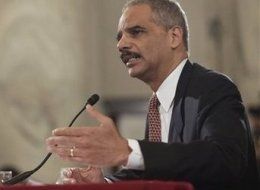
Holder

Attorney General Eric Holder forcefully defended the criminal justice system as a venue to try terrorists on Monday, following the guilty plea his department secured from a terrorist suspect who had plotted to blow up the New York City subway system.

Speaking shortly after Najibullah Zazi pleaded guilty to counts of conspiracy to use weapons of mass destruction, commit murder in a foreign country, and provide material support to al-Qaeda, Holder touted the ability of the criminal justice system to pry intelligence - and secure strong verdicts - in cases like this and others.

"As I have stated on other occasions, the criminal justice system also contains powerful incentives to induce pleas that yield long sentences and gain intelligence that can be used in the fight against Al Qaeda," he said. "We will use all available tools whenever possible against suspected terrorists."

Under siege over the past month for his decision to try 9/11-plotter Kahlid Sheik Mohammad in a criminal court in Manhattan, the Zazi plea was undoubtedly a refreshing bit of news for the Holder Department of Justice.

An American citizen who was recruited by al Qaeda while fighting for Taliban troops in Pakistan, Zazi had plotted to set off a bomb in the New York City subway system this past fall. Authorities were able to intervene in time and, in the process, uncovered what they described as useful intelligence from his correspondence with al Qaeda.

Coming at roughly the same time as the decision to hold the KSM trials in New York, Zazi's case has not, similarly, been treated as a proxy battle over the efficacy of placing suspected terrorists in the criminal justice system. On Monday, however, Holder made the case that the guilty plea provided as solid example as any that the civilian system was equipped to handle terrorist threats.

"This demonstrates that our federal civilian criminal justice system... is a powerful tool in our fight against terrorism," he said. "It doesn't mean it is the only tool we should use. We have to couple it with what we do on the military side, what we do on the intelligence gathering side. But to take this tool out of our hands, to denigrate the use of this tool, flies in the face of the facts, flies in the face of the history of the use of this tool. It is more politics than about facts. "

Taking a noticeable swipe at his predominantly Republican detractors, he added:

"What happened today is consistent with what the Department of Justice, the FBI, the intelligence departments have done over the previous years... The one thing that should not be absent from that debate is the facts. This is a demonstration of the facts. This is not some kind of partisan, political act to shape something for the purposes of an election. I'm only dealing with the facts."

Captured in mid-September by authorities, Zazi was initially held in a Colorado facility pursuant to criminal complaint. Unlike KSM, he is a legal permanent resident of the United States. Zazi was transferred to New York after being indicted there and was subject to trial in the Eastern District of New York.

Entry #1,826

Your next credit card statement will contain an ugly truth

Credit Card Reform May Shock Some

New Law Shields Card Users From Sudden Interest Rate Hikes And Excessive Fees

Eileen AJ Connelly

AP Personal Finance Writer

POSTED: 2:49 pm EST February 22, 2010

UPDATED: 3:04 pm EST February 22, 2010


NEW YORK -- Your next credit card statement is going to contain an ugly truth: how much that card really costs to use.

Now, thanks to a long-awaited law that goes into effect Monday, you'll know that if you pay the minimum on a $3,000 balance with a 14 percent interest rate, it could take you 10 years to pay off.

"Jaws will drop," said David Robertson, publisher of The Nilson Report, a newsletter that tracks the industry. "I don't doubt for a nanosecond that it's going to give a lot of people a sinking feeling in their stomachs."

That's not all that will make them queasy.

During the past nine months, credit card companies jacked up interest rates, created new fees and cut credit lines. They also closed down millions of accounts. So a law hailed as the most sweeping piece of consumer legislation in decades has helped make it more difficult for millions of Americans to get credit, and made that credit more expensive.

It wasn't supposed to be this way. The law that President Barack Obama signed last May shields card users from sudden interest rate hikes, excessive fees and other gimmicks that card companies have used to drive up profits. Consumers will save at least $10 billion a year from curbs on interest rate increases alone, according to the Pew Charitable Trust, which tracks credit card issues.

But there was a catch. Card companies had nine months to prepare while certain rules were clarified by the Federal Reserve. They used that time to take actions that ended up hurting the same customers who were supposed to be helped.

Consumer advocates say the law still offers important protections for the users of some 1.4 billion credit cards.

"We expected some rate increases; we expected some annual fees," said Ed Mierzwinski of the U.S. Public Interest Research Group, an advocacy organization that lobbied for the law.

To be sure, the law takes effect while credit card companies are still reeling from the recession.

In 2007, the top 12 card issuers earned a combined $19 billion from credit cards, according to The Nilson Report. A year later, amid the financial meltdown, profits for those companies fell more than 65 percent to $6.32 billion. The plunge was largely because defaults ballooned as unemployment soared.

Profit figures for 2009 aren't yet available. But banks wrote off about $35 billion in credit card debt last year, as the unemployment rate topped 10 percent. Analysts predict the default rate will remain at least twice as high as normal through this year, and longer if unemployment stays high.

At the same time, the law is expected to cut into future profits. FICO Inc., the company best known for its credit scores, projects the average card will generate less than $100 a month in revenue within three years, down from $200 a month before the law.

That helps explain why the industry reacted so aggressively to the legislation. Among the moves it made:

-- Resurrected annual fees.


Annual fees, common until about 10 years ago, have made a comeback. During the final three months of last year, 43 percent of new offers for credit cards contained annual fees, versus 25 percent in the same period a year earlier, according to Mintel International, which tracks marketing data. Several banks also added these fees to existing accounts. One example: Many Citigroup customers will start paying a $60 annual fee on April 1.


-- Created new fees and raised old ones.

These include a $1 processing fee for paper statements for cards issued by stores such as Victoria's Secret and Ann Taylor. Another example is a $19 inactivity fee Fifth Third Bank now charges customers who haven't used their card for twelve months.

Other banks increased existing fees. JPMorgan Chase, for instance raised the cost of balance transfers from one card to another to 5 percent of the transfer from 3 percent.


-- Raised interest rates.

The average rate offered for a new card climbed to 13.6 percent last week, from 10.7 percent during the same week a year ago -- meaning cardholders had to pay almost 30 percent more in interest, according to Bankrate.com.

For millions of other accounts, variable interest rates that can rise with the market replaced fixed rates. The Fed is expected to start raising its benchmark interest rates later this year, which would likely trigger an increase on those cards.

Besides making credit more expensive, banks also made it harder to get and keep credit cards. One big reason: Since the financial meltdown, many credit card issuers have been trying to reduce risk.

The number of Visa, MasterCard and American Express cards in circulation dropped 15 percent in 2009, for example. Rarely used cards were among the first cut off. Some cards linked to rewards programs for purchases like gasoline were likewise shut down.

Card companies also slashed credit limits for millions of accounts that remain open. About 40 percent of banks cut credit lines on existing accounts, according to the consultant TowerGroup, which estimated that such moves eliminated about $1 trillion in available credit. Much of that was unused.

Credit lines were frequently cut in regions most affected by the housing crisis and high unemployment, such as Florida and California, said Curt Beaudouin, a senior analyst at Moody's Investors Service. "They're not doing it willy nilly, they're doing it systematically," he said.

Companies are also making fewer solicitations. Mailed offers for new cards increased in the final three months of 2009 for the first time in two years, but there were only about 575 million. That's about a third of the average number of quarterly offers from 2000 through 2008, according to Mintel.

Because the law makes credit cards less profitable, some subprime borrowers may not be able to get cards at all, at least for the next few years. There's no fixed definition, but subprime borrowers generally have a FICO score below 660. For a good portion of this group, options may be limited to alternatives like PayPal and other electronic payment services, prepaid cards and payday lenders.

"Not everyone either deserves or should have an open-ended credit card," said Roger C. Hochschild, chief operating officer of Discover Financial Services.

Joining those who won't easily get cards: college students and others under age 21. The law strictly limits card marketing on campuses, ending giveaways like T-shirts and pizza Cards can only be granted to applicants who show they have the means to repay, or those who have a co-signer who can pay.

"Some of the more vulnerable parts of the population are a little bit more protected," said Georgetown University finance professor James Angel. But he predicts card companies will find ways around most of the new restrictions. And once the economy recovers, he expects the lending spigot to open again.

In the meantime, there is one group of consumers that banks will chase after -- those who carry a balance from month to month for at least part of the year, and pay their bills on time. They're the most profitable and least risky group for banks.

Also a target customer: anyone willing to do more business with the bank that issues their card, say opening a checking or savings account or taking out a mortgage. 

 "What we want is a deeper relationship with our customers," said Andy Rowe, an executive vice president with Bank of America's card business. Customers willing to stick with a single bank may even be able to get annual fees waived or get a better interest rate, he said. "That's where the competition will be."

Entry #1,825