Super Bowl Ads That Will Have People Buzzing
Entry #3,875



The time is now 1:19 am
You last visited
July 10, 2026, 11:05 pm
All times shown are
Eastern Time (GMT-5:00)

How Cowboys owner Jerry Jones found a way to profit on the Super Bowl

|
GARY JACOBSON
The Dallas Morning News
In the NFL , an owner and his team don’t profit directly from hosting a Super Bowl . The league takes over the stadium rent-free and treats the host the same as every other club. All 32 teams share equally from the sale of tickets, concessions and merchandise.
“There is really no direct benefit,” said Bill Prescott, chief financial officer of the Jacksonville Jaguars , who hosted the 2005 game. Other recent hosts say the same.
But Jerry Jones will be an exception.
Because of his ownership stakes in the concessions company that operates at Cowboys Stadium , and dozens of Papa John’s stores in North Texas, the Dallas Cowboys owner benefits from every food and beverage item sold at the stadium and every pizza ordered from his Papa John’s stores by fans converging on the area.
In addition, the Super Bowl will produce nearly $10 million in ticket and parking taxes dedicated to paying off a portion of stadium debt that Jones guarantees.
In a news conference this week, Jones talked about the game lifting “all boats” economically in the region. As one of the most innovative owners in the NFL, he just happens to have more boats.
Cowboys spokesman Brett Daniels acknowledged the owner’s private business connections with this game but said, “You really host a Super Bowl for the region, prestige and global exposure, not for the money.”
Indeed, hosting the game can cost an owner money. Super Bowl preparations have tied up Cowboys Stadium since mid-January, Daniels said, precluding other possible revenue-generating events during that time.
Long term, the biggest potential payoff for the Cowboys owner could come if his stadium — and, therefore, Legends Hospitality Management, the stadium’s concessionaire — is picked to host the Super Bowl on a regular basis.
“Having that sort of revenue and profit boost every four to five years increases the value of the company significantly,” said Mike Rawlings , chief executive of Legends.
Jones owns about a third of Legends, giving him a large interest in the company’s market value and profits, including from the Super Bowl.
Concessions
Rawlings expects Super Sunday sales of food and beverages at the stadium to approach $5 million or more. Proceeds will be divided between the NFL and Legends. During the regular season, Legends splits revenue with the Cowboys.
Rawlings wouldn’t reveal that split, but typical agreements can give teams 35 percent to 50 percent of revenue, depending upon the category of item sold.
The concessions company was founded two years ago in partnership with the Steinbrenner family, owner of the New York Yankees , two investment firms and the Jones family.
Legends’ annual revenue is at least $150 million, Rawlings said. If the company continues its rapid growth, the enterprise has the potential to be worth several hundred million dollars, based on a comparison with a competitor, Centerplate , which was once publicly held.
Asked in a brief interview after his news conference if he agreed with The Dallas Morning News’ analysis of the potential valuation for Legends, Jones said, “Yes.”
For regular-season games, Legends also handles merchandise sales at Cowboys Stadium. But the NFL brings in a separate company for the Super Bowl.
Pizza sales
On the pizza front, Papa John’s International expects a super boost from the Super Bowl, nationally and in North Texas, said John Schnatter, the company’s founder, chairman and co-chief executive.
The Jones family owns a 49 percent stake in 75 Texas Papa John’s stores, primarily in North Texas. Papa John’s, a sponsor of the Cowboys and the NFL, owns 51 percent. Nationwide, Papa John’s has 2,875 stores.
“I think we’ll have a record week in Dallas,” Schnatter said, boosted by out-of-town fans here for the game.
Super Sunday is one of the biggest days for pizza in America. Schnatter predicted his company would sell 1 million pizzas nationwide on Sunday, up from 900,000 a year ago. He estimated, roughly, that Jones’ stores would sell about 26,000 pizzas. Most of those would be sold even if the game weren’t played in North Texas.
Papa John’s declined to say how much revenue those numbers would produce. But multiplying by $10 (the special price for any large Papa John’s pizza in the days leading up to the game) offers at least a ballpark idea of possible revenues: a quarter of a million dollars for Jones’ stores and $10 million companywide.
Schnatter said Jones and the Cowboys have been good business partners. “I wish I had 30 more Jerry Joneses, frankly,” Schnatter said. “I couldn’t find a better partner.”
Jones acquired his stake in the Papa John’s stores in mid-2004, when they were losing money. “We’re talking about going from millions and millions of dollars negative to millions and millions of dollars positive,” Schnatter said of Jones’ stores, declining to be more specific. “He’s by far the most talented businessman I’ve ever met.”
Ticket tax
Arlington contributed $325 million to the cost of Cowboys Stadium, funded primarily through an increase in the local sales tax. An additional $148 million of the original stadium debt involved bonds issued by Arlington and backed by Jones.
That obligation has two dedicated funding sources: a 10 percent ticket tax on stadium events and a $3-per-vehicle parking tax that produces minimal revenue.
The NFL estimates that the ticket tax for the game will total about $9.5 million, said Bill Lively, president and chief executive of the North Texas Super Bowl Host Committee. According to the committee’s agreement with the league, the NFL pays the tax to the city, and the committee reimburses the NFL. It’s the host committee’s single largest expense.
The ticket tax ultimately benefits Jones by paying down a debt that he guarantees.
Extra tickets
Indirect benefits for the host owner and team go beyond prestige and exposure. Even though the NFL gets all the revenue, the extra tickets that the host receives can benefit current ticket holders and be used as marketing incentives for season ticket and suite renewals.
The Jaguars, according to Prescott, the team’s CFO, were able to increase renewal rates because of Jacksonville’s Super Bowl.
As host, the Cowboys receive 5 percent of Super Bowl game tickets. The two participating teams each receive 17.5 percent of the tickets, the 29 other teams each receive 1.2 percent and the NFL gets 25.2 percent.
Also, every suite holder at Cowboys Stadium is entitled to buy his or her full allotment of tickets, half in a suite (not necessarily their own), half elsewhere in the stadium. These tickets come out of the NFL’s allocation.
“The Super Bowl enhances value for everybody,” Jones said, and makes the stadium more attractive for events in the future.
Last year, less than three weeks before the Super Bowl, Sun Life became the naming rights sponsor for the Miami Dolphins’ stadium. Some think hosting the game helped the timing of that deal, which directly benefited the Dolphins.
That won’t happen this year for Cowboys Stadium. But New York Giants co-owner John Mara has said that hosting a Super Bowl could help his new stadium attract a named sponsor.
New Meadowlands Stadium , shared with the Jets , hosts the 2014 game. Still, Mara said last year after the site announcement: “You do not make any money hosting the Super Bowl. You are lucky if you break even.”
He could take some tips from Jerry.
JOHN BOEHNER SEX PROBE
National Enquirer
February 4, 2011
New Speaker of the House JOHN BOEHNER is embroiled in a bombshell sex scandal - involving at least two different women, The ENQUIRER has learned!
Capitol Hill insiders and political bloggers have been buzzing about an upcoming New York Times probe - detailing an alleged affair that the 61-year-old married father of two had with pretty Washington lobbyist LISBETH LYONS.
And an ENQUIRER investigation has uncovered a bedroom encounter that Boehner - second in line of succession to the presidency - allegedly had with LEIGH LaMORA, a 46-year-old former press secretary to ex-Colorado Congressman JOEL HEFLEY.
The Ohio native, a congressman for 20 years, and his wife Deborah, 62, have been married for 37 years.
But she has shunned the capital's social scene, and he is often seen out on the town without her.
"Deborah normally stays back in Ohio while John spends most of his time in D.C.," said an insider. "It is not uncommon for Boehner to attend parties and events without his wife."
Contacted by The ENQUIRER in late January about the cheating charges, Deborah stood by her man and would not comment about the explosive allegations.
But The ENQUIRER learned that Deborah was nowhere to be seen when the ruggedly handsome congressman attended a casino party at the home of a D.C. lobbyist in August 1997 - and reportedly hooked up with pretty congressional press secretary Leigh LaMora.
Lawmakers say guards union is a key obstacle in effort to keeping cellphones out of prisons
The guards' contract has a clause that would cost the state millions if they had to be stopped and searched on the way into work, lawmakers say, and it's prison workers who are mainly to blame for inmates like Charles Manson possessing phones.
Jack Dolan
Los Angeles Times
February 3, 2011, 1:48 p.m.
Lawmakers struggling to keep cellphones away from California's most dangerous inmates say a main obstacle is the politically powerful prison guards union, whose members would have to be paid millions of dollars extra to be searched on their way into work.
Prison employees, roughly half of whom are unionized guards, are the main source of smuggled phones that inmates use to run drugs and other crimes, according to legislative analysts who examined the problem last year. Unlike visitors, staff can enter the facilities without passing through metal detectors.
While union officials' stated position is that they do not necessarily oppose searches, they point to a clause in their contract that requires corrections officers to be paid for "walk time" – the minutes it takes them to get from the parking lot to their posts behind prison walls.
Putting metal detectors along the route, with an airport-like regimen involving removal of steel-toed boots and equipment-laden belts, could double the walk time, adding several million dollars to officers' collective pay each year, according to a 2008 Senate analysis.
Since then, cellphones have proliferated exponentially in California's state lockups. This year, state Sen. Alex Padilla (D-Pacoima) is calling on Gov. Jerry Brown to "put the [search] issue on the table" in contract negotiations with the California Correctional Peace Officer Assn.
"Everybody coming into the state Capitol building has to go through a metal detector….You even get searched when you go to a Lakers game," said Padilla, who for three years has sponsored unsuccessful legislation to crack down on the contraband phones. "Why don't we have that requirement at correctional facilities, of all places?"
Brown, whose campaign received generous financial support from the union and who made one of his few public appearances between the November election and his January inauguration at the union's annual convention in Las Vegas, would not say whether searches are under review.
"Our office does not discuss the details of pending contract negotiations," said Brown spokesman Evan Westrup, who noted that the prison system is testing technology to block cellphone calls in prisons.
More than 10,000 cell phones made their way into California prisons last year -- up from 1,400 in 2007, said corrections spokeswoman Terry Thornton. Two of those wound up in the hands of Charles Manson, who is serving a life sentence for ordering the ritualistic murders of actress Sharon Tate and six others in 1969.
The phones can fetch as much as $1,000 each behind prison walls, according to a recent state inspector general's report, which detailed how a corrections officer made $150,000 in a single year smuggling phones to inmates. He was fired but was not prosecuted because it is not currently against the law to take cellphones into prison, although it is a violation of prison rules to possess them behind bars.
Padilla had a bill in 2008 that would have required searches of prison staff, but it died after union officials pointed out the extra pay that would follow.
This year, Padilla, who also gets financial support from the union, has steered clear of it by omitting staff searches from a bill that would impose a $5,000 fine on anyone caught trying to smuggle a phone to an inmate. The proposal would also lengthen sentences for prisoners caught with phones by up to five years if it can be shown that they used them to commit crimes.
Former Gov. Arnold Schwarzenegger vetoed a similar bill last year, saying the penalties weren't stiff enough.
Such punishment might not deter an inmate like Manson, who in all likelihood will die in prison, but the threat of added time might make other prisoners think twice about keeping a phone, Padilla said.
Prison officials added 30 days to Manson's sentence after guards found an LG flip phone under his mattress in March 2009. They found him with a second phone, equipped with a camera, on Jan. 6, Thornton said. She declined to provide details about where Manson got the phone, saying the case is still under investigation.
Analysts for the Senate Public Safety Committee who studied last year's legislation left no room for doubt about who they believed was responsible for most of the unauthorized phones.
"All indications are that the primary source of cellphones being smuggled into prisons is prison staff," they wrote. "The committee has been presented no evidence of visitors who are properly screened through metal detectors being responsible for the problem."
Guard union spokesman JeVaughn Baker said pointing the finger at corrections officers is all wrong.
"Sure, there are instances where officers have brought them in," Baker said. "But to say that prison staff are the most likely smugglers of cellphones is simply inaccurate."
Asked whether union members would be willing to forgo extra pay for standing in line at metal detectors, Baker said, "The law demands that individuals are compensated for the time that they work."
Suspect's phone found charging at scene of burglary, police say
The Associated Press
7:54 a.m. EST
February 3, 2011
S.F. police officer arrested on theft charges
Jill Tucker
Chronicle Staff Writer
San Francisco Chronicle
February 3, 2011 04:00 AM
A San Francisco police officer was arrested Wednesday and faces two felony charges related to the theft of a vehicle registration sticker that the district attorney's office says he stole from a motorist during a traffic stop.
Officer Gregory Hui, 45, who also faces a misdemeanor embezzlement charge, had his bail set at $18,000, police said.
Hui was reportedly on patrol in the Richmond District in January 2010 when he pulled over a motorist for having a broken brake light, District Attorney George Gascón said in a news release.
During the traffic stop, Hui cited the driver for an improper registration sticker, according to the district attorney's office.
The officer, who has been on the police force for seven years, then confiscated the tag and put it on a car he co-owns, which had an expired tag, Gascón said.
"Police officers are sworn to uphold the law and protect the public," Gascón said in a statement. "When they violate the law and public trust, they must be held accountable, particularly when the allegations involve on-duty conduct. The law must apply to everyone equally."
Hui was suspended without pay on Dec. 17 while the police internal affairs unit investigated the incident.
He was charged with two felonies for fraudulent use of vehicle registration and a misdemeanor charge of "theft under the color of authority," police said.
Read more: http://www.sfgate.com/cgi-bin/article.cgi?f=/c/a/2011/02/02/BATR1HI4P1.DTL#ixzz1CupIvzJ6
You can disagree with Obama without being racist
1:43 PM EST, January 28, 2011
Recently I was discussing President Obama's first two years in a local bar with a group of five strangers. As you might expect, the different people had different opinions. While it's sometimes puzzling how far apart people can be on the same issue, it's also a reminder of part of what makes this country so great. The free exchange of ideas in a cultural setting. People can openly voice their opinions without fear of reprisal.
Well, most of the time anyway.
With President Obama, if you disagree with a policy of his, you sometimes run the risk of being accused of racism. Every president has had their critics, and Mr. Obama is no different. In fairness to Mr. Obama, I have never heard him play any type of race card. However, I am puzzled at how if I think the new health care bill is not a good idea, some of his supporters can accuse me of hating a race of people. Many times it's a former Obama voter who's accused of racism when they disagree with a specific policy. Doesn't make much sense, does it?
Accusing someone of racism simply for disagreeing with the president is not only silly, it's flat out irresponsible. And the sad part for the people making these accusations is that it only opens the door to more divisiveness.
Steve Krywucki, Sykesville
The Baltimore Sun
Sarah Palin would be a 'great' President, says former Mass. governor Mitt Romney
Aliyah ShahidWednesday, February 2nd 2011, 3:18 PM

Platt,Beck/GettyMitt Romney's bid for the GOP nomination in 2008 went up in flames. Sarah Palin is rumored to be running in 2012.
Mitt Romney claims he isn't sure if he'll run for President in 2012, but he knows someone else that would do a "great" job: Sarah Palin.
During an interview on Tuesday night with Piers Morgan on CNN, the former GOP Massachusetts governor said Palin would bring a lot to the political table.
"I believe she is an extraordinarily powerful and effective voice in our party, that she has generated a great deal of support and attention, that she'd be great in a primary process," he said of the former vice-presidential nominee and Tea Party darling. "She'd bring attention to the process, and frankly, the more people we have on the stage in those debates talking about different ideas and different approaches, the better."
Romney has gone on a media blitz to discuss his new book, "No Apology: The Case for American Greatness," making appearances on "Good Morning America," "Late Show with David Letterman" and "The View."
But the appearances have fueled speculation that Romney, who lost in the Republican primary in 2008 to Sen. John McCain, is considering running again in 2012.
When the CNN host asked whether Romney could beat Palin, he replied, "I don't know the answer to that." The 63-year-old said his wife is urging him to run.
"My wife thinks I should run," said Romney. "She's absolutely committed. She's saying, 'You've got to run, you've got to have somebody who understands the world of the economy, small business, who can create jobs.' She's convinced I've got to run. But I have to look more broadly and say, 'Alright, do I have a team necessary to do this?' "
According to a recent Rasmussen survey, Romney leads in a national poll, with 24% of likely GOP primary voters picking him as their presidential nominee. Palin came in second with 19%, followed by former Arkansas Gov. Mike Huckabe (17%) and former House speaker Newt Gingrich (11%).
Romney told Letterman he has no plans to run for President, but added "I'll keep the door open." He also gave a shout out to Palin.
"Be careful what you say about her," Romney joked. "She has a rifle, you know."
Cops conducted illegal and humiliating body cavity search on me, Bronx man claims in suit
Rocco ParascandolaWednesday, February 2nd 2011, 4:00 AM

Florescu for NewsShawn Schenck claims a cop reached inside his jeans to perform a body cavity search.
A Bronx man wrongly accused of dealing drugs at a bodega is suing the city because cops conducted an illegal body cavity search, his lawyer said Tuesday.
Shawn Schenck, 47, said he walked into the Green Valley Deli and Pizza on Sept. 15 to buy a pack of cigarettes.
Five cops burst into the store and arrested Schenck and four other men. One of the cops dragged Schenck outside and slipped on a rubber glove, the suit - expected to be filed Wednesday - charges.
"Where's it at?" one of the officers reportedly asked. "Where's it at?"
The cop reached inside Schenck's jeans, felt around his testicles and then probed his anus, the suit claims.
"You're violating me!" Schenck recalled screaming. "You're violating me!"
The humiliating search happened in front of about 40 people, Schenck said. Police didn't have a search warrant, which is required for body cavity probes.
Cops denied the rectal search, saying cops only frisked him.
Police didn't find any drugs on Schenck after he was busted at 158th St. and Park Ave. Still, he was in custody for three hours.
Deputy Inspector Kim Royster, a police spokeswoman, said a supervisor reviewed surveillance footage from the bodega that proved the married Bronx father of two wasn't part of the drug crew. Schenck was then released, Royster said.
Schenck, who served time in the late 1990s for a drug conviction, said no one deserves such treatment.
"After what happened, people were looking at me sideways," he said. "People were cracking jokes for like two months. This thing gave me a whole bunch of anxiety."
The NYPD's Patrol Guide was revised in 2008 after the state Court of Appeals court ruled police must have a warrant to execute the invasive searches - barring an emergency. That case involved a Harlem drug suspect. The indictment against him was dismissed.
Police: Florida boy drops loaded handgun inside pre-kindergarten class
GUN
January 27, 2011
Greg Botelh
CNN
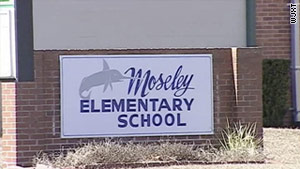 Moseley Elementary School is in Palatka, Florida. A teacher said she saw a .22-caliber handgun fall out of the boy's pocket there.
Florida police are trying to figure out how a 5-year-old boy came into possession of a loaded handgun that he dropped inside a pre-kindergarten class.
A female pre-kindergarten teacher at Moseley Elementary School in Palatka was giving a music lesson Tuesday morning when she noticed the small, .22-caliber handgun fall out of the boy's pocket, Assistant Police Chief James Griffith said. The firearm did not go off, and no one was hurt.
But the boy, along with the gun, were promptly brought to school administrators. They alerted school security and police at 9:25 a.m., having determined that there was no immediate danger to the school, which is in Palatka in northeastern Florida.
February 1, 2011 6:45 PM
Frank Vascellaro
MINNEAPOLIS (WCCO) — They’re calling it the parcel puppy. A Minneapolis woman is charged with animal cruelty after police say she tried to send a puppy through the mail.
The poodle-mixed pup is being held temporarily at the animal control office in Minneapolis but still belongs to the woman who allegedly tried to mail it — 39-year-old Stacey Champion.
“Clearly there wasn’t a whole lot of thought that went into this,” said Sgt. Angela Dodge with the Minneapolis Police Department.
Dodge said last Tuesday Champion took the puppy to the Loring Post Office. The puppy was in a box with a priority sticker on it.
“A puppy is a definite no-no,” said Pete Nowacki with the U.S. Postal Service.
Postal workers didn’t know right away about the puppy inside, until the box fell off the counter.
“Apparently the puppy must have moved at that time and the box had shaken and fallen. At that point, the clerk and supervisor could hear a sound like panting coming from inside the box,” recalled Nowacki.
“They could hear it in the box, they opened the box and discovered a live puppy on there with no food or water,” said Dodge.
Champion did want the puppy to get there quickly because she mailed him 2-day priority. Officials say she was mailing the puppy as a present for a relative.
“The notion of putting a puppy in a box, putting them on a plane with no food, no water, no place to do their business, it’s not going to work,” said Nowacki.
The puppy is doing fine. Champion has until Friday to make an appeal to animal control to get the puppy back. If animal controls says she can’t have the puppy back, it will go up for adoption.
Sonya Goins
LINK TO VIDEO:

Sheila M. Poole and Craig Schneider
The Atlanta Journal-Constitution
It seems that even houses of worship aren’t immune from foreclosure.
The wave that swept through metro Atlanta’s residential market, forcing thousands from their homes, has also swamped dozens of area churches.
More than 90 metro Atlanta churches were posted for prospective foreclosure from 2006 to 2010, according to a review by the Kennesaw-based real estate research firm Equity Depot for The Atlanta Journal-Constitution. At the end of the day, roughly 50 of those churches were actually lost through foreclosure proceedings.
Of 113 churches currently listed for sale in metro Atlanta, at least 33 are foreclosures or churches in serious financial trouble, estimated Rick Arzet, an associate broker with Prudential Georgia Realty, who specializes in churches. Although that’s just a small fraction of the churches that dot the Atlanta landscape, the situation is the worst he’s seen in 40 years.
“Churches are the tail on the dog,” Arzet said . “The people in churches are the same people who are your neighbors,” he said -- the same people who are losing jobs and cutting back on spending and that includes donations to the collection plate.
Poor judgment and even ambition sometimes play a role, as well.
“This is one case where there are a lot of similarities between the secular world and the religious world," said Chris Macke, a senior real estate strategist for CoStar Group, a Washington, D.C.-based real estate services firm that monitors the phenomenon.
In some cases, pastors built larger churches at the peak of the economic cycle thinking that good times would continue indefinitely, he said. When they didn’t, or when projected population growth didn’t materialize, many churches were left with large loans and dwindling revenue.
Small churches, many of them with predominantly African-American congregations, dominate the foreclosure lists. But medium-sized congregations and even one megachurch with debts of more than $18 million show up, too.
An excess of optimism spelled trouble for Bible Baptist Church in Newnan, which was forced to leave a 51-acre campus that included a Christian school and three swimming pools. The church, which was growing rapidly, took on $3.8 million in debt in 2006 to improve its sewer system, parking, playground and gym.
When the economy tanked, many church members lost their jobs and offerings started going down, said Pastor Doug Anderson, who has led the church for 21 years. Church membership dwindled from 400 to about 100. The church now holds services in a shopping center.
“We certainly made mistakes,” Anderson said. “We just got too much debt … We probably tried to do too much too fast.”
Most of the services it supplied to the community have stopped. There is still a Christian school, but no athletics and no summer camp. There are no buses to go into the poor areas and pick up kids.
That's typical: When a church is forced to retrench, its outreach to the surrounding community often suffers. No longer can community members turn to the church for food, clothing, counseling and other support.
"You're not just losing property," said the Rev. Michael Wright, of Concerned Black Clergy of Metropolitan Atlanta, who said his office has fielded calls from about 45 churches in financial straits. "Back in the day, a lot of communities were built around the church. We're losing an information center, a community center and a centerpiece of the community."
Some groups are working to address the problem. At noon Thursday, agroup of Atlanta pastors and representatives from local financial institutions are scheduled to meet at Grace Community Christian Church in Kennesaw to examine ways to handle church foreclosures.
For more than a decade, the Rainbow PUSH Coalition has helped pastors around the nation navigate the financial side of church. To weather the financial storms, said Axel Adams of Rainbow PUSH, churches are cutting back on expenses, combining services and reducing staff. He called the situation in Georgia “fairly bad.”
“I think a lot of churches were really not prepared. We have pastors who read the Bible and interpret Scripture, but a lot were really not paying attention to what was going on economically,” he said.
Some lenders are willing to work with churches, others are not, Adams said. “Some lenders will go beyond the call to ensure that churches stay in business,” he said. “They see the importance of these institutions being in the community.”
Church in the Now, a Conyers megachurch led by James Swilley, watched its congregation explode in the late 1990s.
“I was under the impression it was time to take it to the next level,” Swilley said. “I hate to say we overbuilt, but we did.”
In 2003, he got a loan for about $18 million from Evangelical Christian Credit Union. But the church has been losing members, and money, since. Some of the problem was the recession, but Swilley said some members disagreed with his “very liberal” view of theology. Membership also took a dip after Swilley announced last October that he is gay.
Membership is down to 1,000 now. The 9 a.m. service Sunday, which draws about 100 people, meets in the lobby of the church, not in the 2,500-seat hall.
“It looks like in a few months, we might not be able to stay here,” Swilley said.
Just as it is for a family, foreclosure is traumatic for a congregation.
Last April, the Rev. Don Brealond was stunned when he arrived at his Word of Life Church International in Bartow County to find the locks changed and his belongings outside.
"It was really difficult emotionally," said Brealond. "Everything just fell apart."
The foreclosure ended several years of growth for his church, which had met in a local hotel, a shopping center and an office building before borrowing $600,000 to buy an existing church building.
Brealond said he was advised to borrow from a local private lender for a few months at a higher interest rate, then refinance with a bank. But the bank loan never materialized and soon, the church was falling behind in its payments.
"I got some bad advice," he said. "And I didn't have enough experience to know I was getting bad advice. ... How many pastors do you know who can pay the bills, run the business of the church and get out there and preach and teach and be available to the people?"
For a while he shared the building with another church, then he tried to rent it out for special events. The church now exists on paper only, he said.
Severe financial problems can set church members against one another.
Many members of Flat Rock Community Church near Lithonia say the church should never have taken the loan of $900,000 to build a new 300-seat sanctuary in 2005. But others point out that three major subdivisions were planned for the neighborhood, and the church wanted to grow along with it.
When the Great Recession hit and those subdivisions weren't built, the congregation divided over how to stay afloat. Some favored a merger with another church, others wanted to simply hand the deed back to the bank.
“It divided the church real bad,” said William Waits, 72, of Decatur, a longtime member.
A pastor was replaced. The chairman of the board of trustees resigned. The church staved off foreclosure late last year by declaring a bankruptcy, but recent court documents indicate that the bankruptcy has been dismissed.
“It has become a mess,” said Jamie Jenkins, an official with the North Georgia Conference of United Methodist Churches. “It’s an unfortunate mess. Nobody wins.”
Diddy on Barack Obama: 'He Owes Us'
Kirsten West Savali
Jan 31st 2011 6:39PM

Mr. "Take Dat" himself, Sean "Diddy" Combs, is upset with President Barack Obama, and he took his beef where most hip-hop artists do... straight to the Source.
In the January issue of "the hip-hop Bible," the entrepreneur extraordinaire claims that President Obama, in the infamous words of Kanye West, "doesn't care about black people."
"I love the president, like most of us. I just want the president to do better. There's a difference between us voting for somebody and us believing in somebody. He's the person that we believed in, so I pray night and day that he understands how God ordained his presidency. I feel there was a promise made to God to look after people that was less fortunate, and [many] of those people are African American."
Combs' bold 2004 "Vote or Die" campaign was revisited in the historic 2008 election with a more partisan mantra: "Obama or Die." The mogul's support and loyalty apparently makes him an authority on what the POTUS should do for the African American community.
"It's something he might not get reelected for, but we elected him," Diddy said. "He owes us. I'd rather have a black president that was man enough to say that he was doing something for black people than have a one-term president who played the politics game [to get re-elected]"
I cannot be the only one who finds Diddy's ire a tad hypocritical. While Obama is known to address the importance of family and takes African American men to task for their sometimes irresponsible behavior, Combs has five children, and has yet to marry, or otherwise show any visible respect for any of the three mothers. Yes, three mothers.
While our president has stressed education, and the importance of recognizing the "winner of the science fair, not just the Super Bowl," Combs' pool of talent gets younger and younger, and the "money, cash, ho*s" mentality seems to be drilled into them at Bad Boy boot camp.
While I agree that the president needs to grow a backbone and address the inequalities that the African American community faces with the same fire and conviction as he addresses the plight of the Hispanic/Latino community, in general he has passed more legislation to elevate the plight of all Americans than any executive in history.
It is true that Combs' philanthropic efforts are to be admired; however, he should put his mouth where his money is. Hip-hop has long been emulated by our youth, and the misogynist lyrics and hedonistic lifestyle poisoning their brains is just as much of a crime, if not more so, than another president without a "black agenda."
LINK TO STORY:
http://www.bvblackspin.com/2011/01/31/diddy-on-barack-obama-he-owes-us/
