

truesee's Blog

Minorities Frisked More but Arrested at Same Rate

  The New York Times


May 12, 2010

Minorities Frisked More but Arrested at Same Rate

AL BAKER

Blacks and Latinos were nine times as likely as whites to be stopped by the police in New York City in 2009, but no more likely to actually be arrested.

The more than 575,000 stops of people in the city — a record number of what are known in police parlance as “stop and frisks” — yielded 762 guns.

Of the reasons listed by the police for conducting the stops, one of those least commonly cited was the claim that the person fit the description of a suspect. The most common reason listed by the police was a category known as “furtive movements.”

Under Commissioner Raymond W. Kelly, the New York Police Department’s use of such street stops has more than quintupled, fueling both an intense debate about the effectiveness and propriety of the tactic and litigation aimed at forcing the department to reveal more information about the encounters.

The Center for Constitutional Rights, which got the data on stop and frisk after it first sued the city over the issue after the 1999 killing of Amadou Diallo, said its analysis of the 2009 data showed again what it argues is the racially driven use of the tactic against minorities and its relatively modest crime-fighting achievements.

The center, a nonprofit civil and human rights organization financed by donors and foundations, as well as other critics of the tactic, like to note that a gun buyback program conducted by the police at several Bronx churches one day in January yielded 1,186 guns.

Police officials, for their part, vigorously praise the stop-and-frisk policy as a cornerstone of their crime-suppression efforts. The stops led to 34,000 arrests, and the seizing of more than 6,000 weapons other than guns, according to the center’s analysis. The police officials argue that the widespread use of the tactic has forced criminals to keep their guns at home, and allowed the department to bank thousands of names in a database for detectives to mine in fighting future crimes.

Besides better reporting, the surge in the number of stops, they said, is also a byproduct of flooding high-crime areas with more officers, a strategy for a force with a shrinking headcount.

“These are not unconstitutional,” Paul J. Browne, the Police Department’s chief spokesman, said of the stops. “We are saving lives, and we are preventing crime.”

According to the analysis of the 2009 raw data by the Center for Constitutional Rights, nearly 490,000 blacks and Latinos were stopped by the police on the streets last year, versus 53,000 whites.

But once stopped, the rates of arrest were virtually the same. Whites were arrested in slightly more than 6 percent of the stops, blacks in slightly fewer than 6 percent. Roughly 1.7 percent of whites who were stopped were found to have a weapon, while 1.1 percent of blacks were found with one.

Given that, some experts who have studied stop-and-frisk data over the last several years say that what prompts an officer’s suspicion for a stop, and the discretion used, are important.

In examining the stated reasons for the stops, as checked off by police officers on department forms, the center found that about 15 percent of the stops last year cited “fits a relevant description.” Officers can check off more than one reason, but in nearly half the stops, the category called “furtive movements” was cited. Nearly 30 percent of stops cited a category called “casing a victim or location”; nearly 19 percent cited a catchall category of “other.”

“These stats suggest that racial disparities in who gets stopped has more to do with officer bias and discretion than with crime rates, which is what the Police Department argues,” said Darius Charney, a lawyer with the Center for Center for Constitutional Rights.

Mr. Browne, the department spokesman, said stop-and-frisk data was “examined in great detail,” in 2007 by the Rand Corporation, “which found no racial profiling.” He said the stops mirrored crime — that while a large percentage of the stops involved blacks, an even larger percentage of violent crimes involved suspects described as black by their victims.

The work by the Center for Constitutional Rights is the latest in a series of examinations of the police tactic defined by a Supreme Court decision from decades ago, Terry v. Ohio, which permitted officers to briefly detain someone based on “reasonable suspicion,” a threshold lower than the probable cause necessary for a formal arrest.

The issue exploded in New York after Mr. Diallo’s killing, when those who protested the shooting contended there was a pattern of racial profiling in stop and frisks. A study in 1999 by Eliot Spitzer, then the state’s attorney general, found that blacks and Hispanics were stopped disproportionately in relation to their involvement in crime and their share of the city’s population.

In 2001, the city enacted a law requiring the police to provide quarterly reports about the raw data to the City Council and settled a lawsuit, also brought by the constitutional rights group, requiring that plaintiffs be given more valuable raw data.

Reporting by the police has become more regular recently. On Friday, Mr. Browne said that in 2010 there were 149,299 stops through March 31, about 13 percent fewer than in the first quarter of 2009. So far, he said, the stops yielded 186 guns.

As the numbers come out, analysts and academics pore over them to gauge effectiveness.

In March, researchers from the Center on Race, Crime and Justice at John Jay College of Criminal Justice said that more data and “increased public discussion of this controversial policing practice” were essential.

“If the public does not have access to the data, in a format that allows the experts to identify important trends, then it harms the public discourse,” said Donna Lieberman, the executive director of the New York Civil Liberties Union, which successfully sued to get the raw data. “And that is precisely the situation that we are in.”

Particularly vexing to Jeffrey A. Fagan, a professor of law at Columbia University who studied the issue for Mr. Spitzer, is that few can say what happens once the “11 or 12 percent” of street stops that lead to an arrest or summons get to court.

“Are these cases that stand up?” he said. “Do they result in convictions?”

Professor Fagan said it was impossible to tell what dent in crime the tactic had made. Christopher T. Dunn of the civil liberties group said there was no proof it had. Crime has gone down steadily since 1991, but “stop and frisk exploded in 2004,” he said.

But Heather Mac Donald, a research fellow at the Manhattan Institute who has spoken to police officials about the tactic, said there was no question it had an impact on crime. She said that great disparities exist in who commits crime in New York, and that the police fight crime where it is most high, in mostly minority neighborhoods.

“Where are they supposed to go?” she asked.

She echoed Mr. Browne, who said the police are confident the tactic is stopping crime before it occurs.

Mr. Browne took issue with the constitutional rights group’s conclusions about the numbers of arrests or gun seizures the street stops yield. He said, “762 guns can do a lot of damage.” He said taking guns from people in the street was different from accepting their surrender from “moms and grandmothers.” 

And he laid out the logic of the stops: More police are sent to higher crime areas, where criminals and victims live; more suspicious activity is associated with that crime; so there are more opportunities for officers to observe suspicious behavior as a result.

John A. Eterno, a former city police captain who worked to computerize the department’s stop-and-frisk data before he retired in 2004, said the tactic could be effective in pushing down crime. But Dr. Eterno, who is now an associate dean of criminal justice at Molloy College, said retired commanders had spoken of the pressures to reflect their use of stop and frisk in CompStat, the department’s computerized crime tracking system.

“My take is that this has become more like a ‘throw a wide net and see what you can find’ kind of thing,” he said. “I don’t’ see it as targeted enforcement, especially when you see numbers that we are talking about.”

The Center for Constitutional Rights also studied post-stop outcomes.

There, it found that officers frisked more people in 2009 than a year earlier, but the rate of frisks for blacks and Latinos was much higher than it was for whites. It found that the police used force in 24 percent of stops — drawing a weapon, say, or throwing people to the ground. The police used force in 19 percent of the stops involving whites but in 27 percent of stops against Latinos and in 25 percent of those involving blacks.

The disparities in the use of force, compared with the numbers of arrests and summonses and of weapons and contraband seized, is something that “the police have not really explained to the public,” Mr. Charney of the Center for Constitutional Rights said.


May 13, 2010   

Entry #2,274

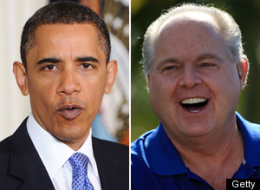
Obama says: Rush Limbaugh can play with himself

Obama Rejects Rush Limbaugh Golf Match: Rush 'Can Play With Himself'
 
 
NY Post
Last Updated: 1:34 AM, May 12, 2010
Posted: 12:17 AM, May 12, 2010


When President Obama was asked if he would play a round of golf with his talk-radio nemesis Rush Limbaugh, the response, relayed by a top Democrat, was: "Limbaugh can play with himself."

This is according to Zev Chafets in his new book, "Rush Limbaugh: An Army of One," due May 25 from Sentinel.

The caustic comeback is another example of the verbal venom between the White House and the conservative radio star. In an interview with CBS News last month, Obama called the views spelled out by Limbaugh and Fox News Channel's Glenn Beck "troublesome."

Chafets reports he encouraged Limbaugh to reach out to the president just after last July's "Beer Summit" that Obama hosted between Professor Henry Louis Gates and Sgt. Joseph Crowley, the Cambridge cop who arrested Gates after he locked himself out of his own home.

"You guys are both golfers," Chafets told Limbaugh. "Would you play a round with the president and show the country that there are no hard feelings?"

"He's the president of the United States," Limbaugh told Chafets. "If any president asked me to meet him, or play golf with him, I'd do it. But I promise you that will never happen. His base on the left would have a s--t-fit."

"How about letting me ask?" Chafets said.

"Go ahead," Limbaugh said. "Nothing will come of it."

Chafets writes that he reached out to Obama adviser David Axelrod, "whom I know slightly," but Axelrod didn't return calls. Then Chafets spoke to "a very senior Democratic activist with whom I'm friendly" who said he would convey the message.

A day or two later the adviser responded, "Limbaugh can play with himself." Chafets wouldn't name the aide or say whether the quote was directly from Obama.

A spokesman said Limbaugh had not seen the book, and wouldn't comment. The White House did not respond to e-mails.


Read more: http://www.nypost.com/p/pagesix/prez_won_play_rush_gamewqqIGJ1ccVpXw1RK#ixzz0nj8wjVYf
Entry #2,273

More Alaskans Oppose Sarah Palin For POTUS In 2012 Than Support Her

Sarah Palin 2012 Opposed By Alaskans

First Posted: 05-11-10 03:22 PM   |   Updated: 05-12-10 01:22 AM

The Huffington Post

Sarah Palin

More Alaskans would oppose Sarah Palin than support her if she were to run for the presidency in 2012, according to some intriguing if not surprising poll numbers released on Tuesday.

A new Rasmussen Reports telephone survey of likely voters in Alaska found 48 percent of respondents said they would not vote for their former governor in a 2012 presidential election. Just 41 percent said they would vote for Palin. Eleven percent said they were undecided.

Rasmussen posits that Alaskans generally are worried that a Palin presidential candidacy would be bad for the state's image -- pointing to 45 percent of respondents who said her candidacy would reflect negatively on the state. By and large, however, the numbers seem to be a reflection of the deep unease the state has with its once beloved governor, who has become a far more divisive and partisan figure since being tapped as John McCain's running mate. Fifty percent of Alaskans had an unfavorable view of Palin (including 37 percent who had a "Very Unfavorable" view).

On a separate front, public opinion does seem to be trending in the president's favor. A poll released by Public Policy Polling, found that, for the first time since October, a majority of Americans expressed approval with the job that Barack Obama is doing.

Fifty percent gave him good marks while 46 percent expressed disapproval. PPP suggests that the numbers may be due in part to the end of the heated health care debate (though the favorable/unfavorable numbers of the legislation passed by congress remain largely the same). Another factor, it seems like, has been generally good news on the labor front, with the economy adding 290,000 jobs in the month of April.

Entry #2,272

Woman fakes being FBI supervisor hires her neighbors

Mass. woman pleads to impersonating FBI supervisor


Associated Press 
Tuesday, May 11, 2010 
Boston Herald

ALEXANDRIA, Va. — A Massachusetts woman has pleaded guilty to impersonating an FBI agent after fooling her former neighbors in northern Virginia into taking jobs as her assistant.

Twenty-nine-year-old Brenna Reilly of Holyoke, Mass., was living in Arlington last year and told neighbors she was the FBI’s director of forensics. Two neighbors agreed to work as Reilly’s assistant. She gave them tasks that included writing condolence letters to family members of slain agents. But Reilly was never an FBI agent, the jobs were phony, and the assistants were never paid.

Peter Carr, a spokesman for the U.S. Attorney in the Eastern District of Virginia, said it remains unclear why Reilly conducted the hoax.

Following Tuesday’s guilty plea, Reilly faces up to three years in prison.


ORIGINAL STORY:

http://www.examiner.com/x-13521-Workplace-Communication-Examiner~y2010m3d31-Fake-FBI-employee-in-real-trouble-for-bizarre-job-scam

Entry #2,271

If a white Republican U.S. president had appointed a white...

Left is mute on racial double standard in Kagan pick

Roland S. Martin

CNN Political Analyst

May 10, 2010 11:49 a.m. EDT


STORY HIGHLIGHTS
 
  • Roland Martin says that there's a double standard in pick of Elena Kagan for Supreme Court
  • Of 29 posts Kagan filled at Harvard Law, 28 were whites, 1 was Asian-American, he says
  • He says left ignores troubling issues about diversity in pick to protect Democratic president
  • Martin: Feminist, civil rights groups should demand answers about Kagan's diversity record


(CNN) -- If a white Republican president of the United States appointed a white male as his next Supreme Court justice, and upon the inspection of his record, it was discovered that of the 29 full-time tenured or tenured track faculty he hired as dean of Harvard Law, nearly all of them were white men, this would dominate the headlines.

It would be reasonable to conclude that the special interest groups that vigorously fight for diversity -- civil rights organizations, feminist groups and other liberal institutions -- would be up in arms, declaring that this person's records showed him unwilling to diversify academia, and unqualified to consider diverse views as one of nine members of the U.S. Supreme Court. There would be widespread condemnations of Republicans having no concern for the nonwhite males in America.

But what if the choice were made by a black Democratic president, and it was a woman? A white woman? A white Democratic woman?

Some of you may not like the fact that I am focusing on the race of the individual, but when diversity is raised, the person's skin color, gender and background are considered germane to the discussion. And if there is silence from black and female organizations, their race and gender matter as well.

We may very well witness this now that President Obama has selected Solicitor General Elena Kagan to replace the retiring Justice John Paul Stevens.

Guy-Uriel Charles, founding director of the Duke Law Center on Law, Race and Politics, has heavily scrutinized Kagan's hiring record as head of Harvard Law School. In a scathing blog post, he has said that of the 29 positions Kagan had a chance to fill, 28 were white and one was Asian-American. And of the group, only six were women -- five white and one Asian-American.

These numbers on the surface are appalling, and would be ripped to shreds by those who value diversity, but my gut tells me that even though Kagan has been tapped by Obama, the normally vocal and persistent voices in this area will be tight-lipped and quiet, unwilling to oppose or heavily criticize the nomination of a woman to the court, and especially one made by an African-American Democratic president.

If that does happen, Republicans will rightly cry foul, saying it represented a double standard -- that the silence was a signal of partisan hacks more concerned about not offending the Obama administration, rather than the ideals they hold near and dear.

They don't want to be seen as going against an ally, and they are more concerned about their access to the White House than the mission they have always valued.

Even before she was chosen, the White House was fighting back against the attacks on her record by Charles, which have been amplified by Salon.com.

According to the site, the White House has disseminated talking points stressing that the real issue is not those who took the jobs, but the offers Kagan made. In addition, they highlight the number of other African-Americans on the faculty, as well as the percentage of minority students during her tenure.

So basically, the White House wants everyone to believe that Kagan made offers, but nearly all of the minorities chose not to go to work for the most prestigious law school in America.

Folks, I wasn't born yesterday.

The real issue will be reaction from the left. It is shameful and disgusting when civil rights organizations, feminist groups and others lose their conviction and sense of purpose when a Democrat gets in the White House. They need to decide what matters: their principles or their politics; their mission or their liberal money; their convictions or chicken dinners in the White House.

Some have already spoken up. The Black Women's Roundtable of the National Coalition on Black Civic Participation released a letter Sunday night questioning Kagan's commitment to civil rights, as well as criticizing the Obama administration for its failure to seriously consider African-American female judges.

"As we continue to promote the legacy of our late founding leader and Co-Convener, Dr. Dorothy I. Height, we will always seek to highlight the concerns of Black women, our families and our communities. Thus, as Dr. Height stated in our previous meeting with your Administration, we believe it is time for African American women to be represented in all sectors of government -- including the Supreme Court of the United States, which in its 221 year history has not had a Black woman nominated to serve on our highest court in the land," the letter stated.

"Our trepidation regarding General Kagan is premised on the lack of a clearly identifiable record on the protection of our nation's civil rights laws. As women leaders, we greatly respect General Kagan's intellectual capabilities and highly accomplished record in the Administration and academia. Nonetheless, there is a dearth of a specific emphasis on the civil rights laws utilized in the protection of racial and ethnic minorities and those traditionally disenfranchised in this nation."

Credibility and consistency are vital for any organization. And if the leaders of civil rights and feminist organizations do not demand strong and clear answers from the White House about Kagan and her diversity track record as dean of Harvard Law School, they are failing the people they say they represent.

Demanding accountability about diversity isn't a one-way street meant only for Republicans. Democrats should never get a pass either.


The opinions expressed in this commentary are solely those of Roland Martin.

Entry #2,270

Woman forced 5-year-old to smoke

Tuesday, May 11, 2010

JC woman accused of forcing 5-year-old to smoke at lake
 
John Thompson
Elizabethton Bureau Chief
Johnson City Press

ELIZABETHTON — A Johnson City woman has been charged with child abuse and other charges after Carter County deputies received complaints that she had forced her 5-year-old child to smoke a cigarette.

Jordon Paige Hensley, 24, 2468 Lakewood Drive, Johnson City, was charged with child abuse and neglect, disorderly conduct and possession of Schedule VI drug.

Deputy Cory Tidwell said he was dispatched to the Watauga Lake Overlook on Wilbur Lake at 8 p.m. when he spotted the car the woman was reported to be driving. He stopped her car at the Misty Waters Store and asked her if she had given her son a cigarette.

Tidwell said she admitted she had given the boy a cigarette and said she did it because “she was teaching him not to smoke.”

While he was talking with Hensley, a witness to the incident pulled into the parking lot and told Tidwell he had seen Hensley stick the cigarette in the boy’s mouth and also saw the child exhale smoke and begin coughing.

He said he also saw the child running around and his mother screaming at him to keep running. He said that when the child fell to the ground screaming that he could not run anymore, Hensley jerked him up by his arm and told him he had better keep running.

As he continued to talk to Hensley, Tidwell said, he noticed she appeared to be trying to hide something. He told her to show him her hands and she told him “no.” When he again asked, she again refused. Tidwell then removed her from the car and placed her in restraints. He then checked where she was sitting and found a small bag of marijuana, according to the report.

A passenger in the car, Chester Paul Kyle III, 36, 2468 Lakewood Drive, was also arrested on charges of violation of probation.

The two are scheduled to answer the charges in Sessions Court on May 21.


LINK TO PHOTO OF MOTHER:


http://www.johnsoncitypress.com/News/article.php?ID=76272


Entry #2,269

Measure to finally audit Federal Reserve Bank passes

OPEN UP THE VAULT
Measure To Audit The Federal Reserve Overcomes Intense Opposition, Passes 96-0

96-0: Fed Audit Passes Senate

First Posted: 05-11-10 12:04 PM   |   Updated: 05-11-10 12:48 PM

Ryan Grim

HuffPost Reporting

Gregg Priorities

UPDATE - 12:10 p.m. - The amendment to open the Fed to a one-time audit of its lending between December 1, 2007 and the present passed 96-0.

* * * * *

Judd Gregg (R-N.H.), the Federal Reserve's most outspoken defender, came out in support of an amendment by Sen. Bernie Sanders (I-Vt.) to force transparency on the Federal Reserve. Gregg's surprising support gives the amendment a major boost.

The Sanders amendment began as a reflection of language passed by the House and cosponsored by Reps. Ron Paul (R-Texas) and Alan Grayson (D-Fla.) that would authorize a broad audit of the Fed. In negotiations with Banking Committee Chairman Chris Dodd (D-Conn.) and officials from the Fed, Sanders scaled back his audit and restricted it to a one-time look at lending activity from December 1, 2007 until the present -- information that the Fed has so far fought to keep from disclosing. It goes further in some respects than the Paul-Grayson measure, in that it mandates the disclosure of recipients of Fed largesse.

Even a year ago, it would have been unthinkable to have Judd Gregg and Ron Paul agree on anything having to do with the Fed other than its street address. The momentum behind a Fed audit is an indication of surging populist sentiment and a financial industry on the defensive.

The battle will continue in conference committee negotiations between the House and Senate and will go on after the bill is signed, as backers push for real transparency at the Fed. But prying open the lid just once would represent a remarkable victory of an ideologically diverse, bipartisan coalition against establishment power.

"Occasionally around here you get to make a historic contribution," said Dodd from the Senate well. A longtime opponent of the Paul-Grayson's audit, Dodd's support of the compromise initially convinced Fed opponents that the measure must have been gutted. A closer look, however, showed it to be a step forward. "This is a historic moment," said Dodd, asking to be added as a cosponsor.

The pressure on the Fed, Dodd said, was already having an impact. He had just met with Federal Reserve Chairman Ben Bernanke to be briefed on the European bailout, Dodd said, and the amendment is already having an impact.

"I want to tell my colleague from Vermont, not only are we going to achieve what he wants here with this amendment, but we had a meeting with the chairman of the Federal Reserve to brief us on the events in Europe over the weekend and the chairman of the Federal Reserve is going to put up on its web site as soon as possible the contracts between the Fed and any other central banks that occurred over the past weekend. He's also committed that the Fed would report weekly on the activity on each of the swap accounts by the federal bank, not simply the aggregate. The legislation is going to do a lot, but you already have an influence on the conduct of the Fed in terms of the transparency issues," Dodd said.

What could cause such a turnaround among Dodd and Gregg? The threat that the original Sanders amendment -- Paul-Grayson's version -- might actually pass. By backing a substitute, even one that's less than the Fed would like, Dodd and Gregg are able to stave off the stronger proposal. Whether the original amendment could have passed was unclear; on Friday, Sanders himself said he wasn't sure the votes would have been there in the face of intense lobbying from the White House and Fed.

Sen. David Vitter (R-La.) took up the Sanders standard and introduced the Paul-Grayson language separately. In backing the Sanders compromise, both Dodd and Gregg savagely attacked the broader amendment.

Paul first introduced a bill to audit the Fed in 1978.

On the Senate floor, Gregg acknowledged the role the Fed played in "aggressively" negotiating the compromise. "Chairman bernanke, I also wish to congratulate he and his staff for stepping forward and progressively -- aggressively pursuing this, which will be positive for both sides," said Gregg.

To get a sense of how far the debate has swung, consider that Gregg warmly reference populist leader William Jennings Bryan in announcing his support for the measure, recalling (accurately) that the Fed was originally founded as a result of populist pressure. "There was a huge debate in this country since the great depression of 1897 and 1907 about how you managed the currency of this country. And the central figure in that debate was William Jennings Bryan, a man of immense proportions in our history. He was a populist in the extreme. And he believed genuinely that turn control of the currency to elected officials, the currency becomes at risk because there is a natural tendency by elected bodies to want to produce money arbitrarily to take care of spending which they deem to be in the public interest. And thanks to the leadership at that time of a number of thoughtful people, including people like Woodrow Wilson, the decision was made to create a separate entity called the Federal Reserve which would manage the currency of the United States and decide how much money was printed," Gregg said.

UPDATE II - 12:39 p.m.: The Vitter amendment failed 37-62. Five senators, four of them Democrats, voted against Vitter's broader amendment, even though they had cosponsored virtually the same amendment when it was led by Sanders, confirming in practice what had already been announced, that a deal had been agreed to.

Sens. Pat Leahy (D-Vt.), Barbara Boxer (D-Calif.), Jeanne Shaheen (D-N.H.), Mark Begich (D-Alaska) and Bob Bennett (R-Utah) all cosponsored the Sanders amendment but voted no on it with Vitter as lead sponsor on the floor.

Entry #2,268

Doctor stabs himself then calls police

Lawyer: Doctor accused of faking attack is good family man

May 11, 2010 1:52 PM

 Chicago Tribune


An Iowa physician charged with falsely reporting that he was stabbed along the Chicago Riverwalk is an upstanding member of the medical community and a family man, his lawyer said in bond court today.

Gary Hunninghake "is 64 years old. He's a professor of medicine at the University of Iowa," said attorney Robert Fisher.

He added that Hunninghake is the father of three children and has a "good character," Fisher said.

Hunninghake, who turned himself into Chicago police Monday, stood silently before the judge in a dark pinstripe suit. Hunninghake is accused of stabbing himself while he walked along the Chicago river and then falsely reporting to police that he was attacked and robbed.

Prosecutors said he told police he was "approached and menaced by three white males" while he jogged on the Chicago Riverwalk east of Michigan Avenue on April 24.

He said the men then stabbed him "about the chest and abdomen" and stole $350 in cash as well as his credit cards and cell phones, prosecutors said.

"Substantial resources were expended in trying to solve (this crime)," said Assistant State's Attorney Lorraine Scaduto.

But an investigation revealed a number of "inconsistencies and downright contradictions," and police contacted Hunninghake, who had returned to Iowa, Scaduto said.

Hunninghake admitted he had concocted the attack, said Scaduto.

Fisher said he still had to review the case and speak more with Hunninghake before he could discuss his client's alleged confession.

"We will certainly see with our subpoenas and the discovery process what in fact they allege he said," said Fisher, who argued that Hunninghake should be released without having to post any money.

Instead, the judge held Hunninghake on a $25,000 bond. He has to post $2,500 cash to be released from custody and is expected to do that this afternoon.

Hunninghake is also the subject of a separate criminal investigation by the University of Iowa police department and is currently on leave, according to a university spokesman.

Interim university spokesman Tom Moore would not comment on the nature of the investigation against Hunninghake, but said five search warrants have been issued in connection with the probe.

Hunninghake was put on administrative leave from the university on April 23, a day after the first search warrant had been executed, Moore said.

Fisher said Tuesday he was not aware of the investigation in Iowa.
 
Hunninghake is expected to appear back in court Monday on the charge of felony disorderly conduct.

-- Cynthia Dizikes

Entry #2,266

Burglars caught after spray paint can spatters


Paint-spattered burglars caught

The suspects are brothers

Updated: Monday, 10 May 2010, 12:23 PM CDT
Published : Monday, 10 May 2010, 12:23 PM CDT


KALAMAZOO, Mich. (WOOD) - Two brothers are behind bars after their alleged break-in scheme backfired.

The Kalamazoo Department of Public Safety received a call around 3 a.m. Sunday about a burglary occurring in the 800 block of W. Walnut Street. The caller saw two people use a can of paint to break a window of a residence and go inside the home. The can broke on impact and sprayed the suspects. 

A police sergeant arrived and noticed the spattered paint and computer equipment on the ground outside the window. He also saw two people walking away from the building. He yelled for them to stop but they ran away.

Other officers and a K-9 unit responded to the scene and locked down the area. 

A female resident was in the home at the time. She did not know about the incident until the officers were searching the residence for other suspects. She was not injured.

One of the suspects who fled tried to walk by the officers' perimeter, according to a news release, but was immediately detained. Officers easily spotted him due to the paint from the crime scene on his clothes. 

The other suspect left the area in a taxi, police said. He was arrested after a search warrant was executed at a house in the 400 block of Clinton Avenue. He was also identified with the help of that spattered paint on his clothes.

The suspects are brothers -- 17 and 19 -- and from Kalamazoo. They now face felony home invasion charges.

Authorities said the person who called 911 and "a rapid response by the officers and poor planning on the part of the suspects" wrapped up the case.

Authorities said in the news release, "a successful conclusion to this incident can be attributed to an alert citizen, a rapid response by the officers and poor planning on the part of the suspects."

Entry #2,265

Shoplifter dies after being chased out of store

CVS probes shoplifting suspect's death, puts worker on leave

Chicago Tribune

May 10, 2010 11:40 AM

The conduct of the drug store manager involved in the death of a suspected shoplifter is under investigation by his employer and he will not be allowed to return to work until that probe is complete, the company said today.

"We are investigating this unfortunate incident and are fully cooperating with police," CVS spokesman Michael DeAngelis said in an e-mail in which he acknowledged the company investigation.

DeAngelis refused to discuss company policy regarding employee handling of suspected shoplifters and if the store manager violated those guidelines. The store manager, reached by the Tribune at his west suburban home, declined to comment.

Chicago police earlier said no charges would be filed against the employee who on Saturday put a chokehold on Anthony Kyser, 35, whose death was ruled a homicide by the Cook County medical examiner's office.


Meanwhile, the former wife of the shoplifting suspect questioned this morning why he had to die over a minor offense.

Ann Marie Balboa, who in September divorced Kyser, her husband of 5½ years, described him as good-hearted and credited him for helping raise her three boys.

Although Kyser had a criminal past, she said, two things surprised her about the chain of events that led to his death on Saturday morning: The fact that, Chicago police say, he stole toothpaste and crayons from a CVS pharmacy, and was killed by an employee from there when he did so.

She disagreed with the decision not to pursue charges against the store manager.

"How's it accidental?" Balboa said. "You're choking the [expletive] out of somebody. He [the employee] should be fired. He should be facing criminal charges. You don't take someone's life over toothpaste."

Authorities said Kyser was shoplifting from the CVS Pharmacy in the 2600 block of South Pulaski Road just before 11 a.m. Saturday. He was chased out of the store and ran into an alley next to the building. Kyser fell unconscious during a struggle with the employee of the pharmacy, officials said.

Kyser, whose last known address was in the 1400 block of South Hamlin Avenue, was taken to Mt. Sinai Hospital, where he was pronounced dead at 11:38 a.m.

Balboa said she had also heard reports that more than one person may have been involved in Kyser's death. "When you're choking someone, you have to be really, really strong," she said, adding that when Kyser died, one of her sons said to her, "Mom, pops was strong. Mom, it had to be more than one person."

Balboa said she used to work in a retail store and said employees aren't supposed to chase shoplifters out of the store.

"You risk your life on the line," she said. "You don't go chasing the thief because you don't know what (weapons) they had."

Police this morning said there were no indications that anyone other than the store manager was involved in Kyser's death.

Balboa also stressed that there were unanswered questions about Kyser's death. "I want to know was the toothpaste on him? Did he drop it in the store?" Balboa said. "We need answers. I really need to know why he was strangled like that. Was it that serious? Over toothpaste? I'm not understanding that." 

Kyser's criminal background includes a 2005 drug conviction in Cook County and a 1999 burglary conviction in Lake County, Ind. But despite his criminal record, Balboa said her former husband had a good heart.

She said friends tell her how well-mannered her three boys -- ages, 18, 14 and 13 -- are, and Balboa credited Kyser with helping them grow up that way. "Pops," as Kyser's stepchildren affectionately called him, would take them to their basketball games and even help coach them.

Balboa said she and Kyser were together for several years prior to their marriage, which she said had its share of "ups and downs."

"I wish our marriage could have been continued," Balboa said. "But if I could have one of his last hugs, it would be perfect. He would want [the three boys] to go to college."

"Here is the father of someone's son, an uncle, a friend who is no longer with us."

 Jeremy Gorner and Jennifer Delgado

Entry #2,263

Obama tells graduates iPad is iBad for democracy

iPad is iBad for democracy, Obama tells graduates

LEONARD GREENE

NY Post 

5:48 AM
May 10, 2010
 

BlackBerry buff President Obama declared war on technology yesterday — singling out Apple’s super-popular iPods and iPads for criticism.

Obama — whose election was credited, in part, to his skillful use of modern media, from smart phones to Twitter to Flickr -- yesterday told college graduates that high-tech gizmos and apps are straining American democracy.

"With iPods and iPads and Xboxes and PlayStations -- none of which I know how to work -- information becomes a distraction, a diversion, a form of entertainment, rather than a tool of empowerment, rather than the means of emancipation," Obama said at Hampton University in Virginia.

Lobbing more grenades than the popular "Call of Duty" video game at targets like Apple, Microsoft, Nintendo and Sony, Obama described the companies' most popular offerings as distractions that are putting unnecessary pressure on the country.

Obama also lamented the spread of social media and blogs through which "some of the craziest claims can quickly claim traction."

"All of this is not only putting new pressures on you," Obama said. "It is putting new pressures on our country and on our democracy."

"We can't stop these changes," Obama said, "but we can adapt to them. And education is what can allow us to do so. It can fortify you, as it did earlier generations, to meet the tests of your own time." 

Obama, who at one time had rapper Ludacris on his iPod and still has a White House-provided profile on Facebook, warned that the world is at a moment of "breathtaking change."

Yet in a speech before members of a generation that never knew life without a computer, Obama came close to declaring technology -- and the information it spawns -- the enemy. 

"With so many voices clamoring for attention on blogs, on cable, on talk radio, it can be difficult, at times, to sift through it all; to know what to believe; to figure out who's telling the truth and who's not," Obama said.

"Let's face it -- even some of the craziest claims can quickly gain traction. I've had some experience with that myself. Fortunately, you'll be well positioned to navigate this terrain."

Read more: http://www.nypost.com/p/news/national/ipad_is_ibad_for_democracy_obama_FrUMkdTNGHlfZ5JOKSgMVO#ixzz0nWRHlUTR

Entry #2,262

Obama chooses Kagan for Supreme Court

Obama chooses Kagan for Supreme Court


Associated Press Writer

May 9,2010

 11:40pm

WASHINGTON – President Barack Obama will nominate Solicitor General Elena Kagan to the Supreme Court, a person familiar with the president's thinking said Sunday night.

The move positions the court to have three female justices for the first time in history.

The source spoke on condition of anonymity because the decision had not been made public. Obama will announce his choice at 10 a.m. Monday in the East Room of the White House.

Known as sharp and politically savvy, Kagan has led a blazing legal career: first female dean of Harvard Law School, first woman to serve as the top Supreme Court lawyer for any administration, and now first in Obama's mind to succeed legendary Justice John Paul Stevens.

At 50 years old, Kagan would be the youngest justice on the court, one of many factors working in her favor. She has the chance to extend Obama's legacy for a generation.

Kagan has clerked for Thurgood Marshall, worked for Bill Clinton and earned a stellar reputation as a student, teacher and manager of the elite academic world. Her standing has risen in Obama's eyes as his government's lawyer before the high court over the last year.

Yet Kagan would be the first justice without judicial experience in almost 40 years. All of the three other finalists she beat out for the job are federal appeals court judges, and all nine of the current justices served on the federal bench before being elevated.


Reuters


Kagan's fate will be up to a Senate dominated by Democrats, who with 59 votes have more than enough to confirm her, even though they are one shy of being to halt any Republican stalling effort.

For the second straight summer, the nation can expected an intense Supreme Court confirmation debate even though, barring a surprise, Kagan is likely to emerge as a justice.

Supreme Court justices wield enormous power over the daily life of Americans. Any one of them can cast the deciding vote on matters of life and death, individual freedoms and government power. Presidents serve four-year terms; justices have tenure for life.

Republicans have shown no signs in advance that they would try to prevent a vote on Kagan, but they are certain to grill her in confirmation hearings over her experience, her thin record of legal writings and her objections to the military's policy about gays.

When she was confirmed as solicitor general in 2009, only seven Republicans backed her.

Democrats went 15 years without a Supreme Court appointment until Obama chose federal appellate judge Sonia Sotomayor last year to succeed retiring Justice David Souter. Just 16 months in office, Obama has a second opportunity with Kagan, under different circumstances.

Obama's decision last year centered much on the compelling narrative of Sotomayor, the first Hispanic Supreme Court justice, who grew up in a housing project and overcame hardship.

This year, Obama particularly wanted someone who could provide leadership and help sway fellow justices toward a majority opinion. The president has grown vocal in his concern that the conservative-tilting court is giving too little voice to average people.

Kagan is known for having won over liberal and conservative faculty at the fractious Harvard Law School, where she served as dean for nearly six years.

Entry #2,260