

truesee's Blog

Naked burglar caught in school ceiling

10:46 PM Feb 28, 2011
Police: Naked burglar found in school ceiling
Police searched Cousins Middle School for more than two hours early Saturday morning, looking for a burglar who set off the school’s security system. When they finally found him, they were surprised that he was completely naked.
Reporter: Barbara Knowles, News Editor

width:223 and height: 300 and picwidth: 178 and pciheight: 240

Ronald Stevens

COVINGTON — Police searched Cousins Middle School for more than two hours early Saturday morning, looking for a burglar who set off the school’s security system. When they finally found him, they were surprised that he was completely naked.

According to a Covington Police Department incident report, officers, the department’s K-9 Unit, deputies from the Newton County Sheriff’s Office and even firefighters with the Covington Fire Department joined in the two-and-a-half-hour search before finally locating the culprit in the ceiling of the building.


Arrested was Ronald Stephens, 21, of 2805 Lee Court, Conyers, who was charged with criminal trespass, burglary and a probation violation warrant out of Rockdale County.

The incident began about 3:30 a.m. when a CPD officer went to the school located at 8187 Carlton Trail to check out the sounding burglar alarm. He reported noticing a stack of plastic crates that appeared to have been used as a makeshift ladder to the roof.

“A boot was about midway up the stack as if a person climbing had stepped out of their shoe,” the report stated. “The security camera above this door appeared to have been knocked free from the wall it was mounted on.”

Inside some glass doors the officer said he saw two media carts full of electronic equipment. A leaf blower, bolt cutters and a crate full of portable radios were on the ground near the door.

When backup officers arrived, the first officer on the scene began to explain what was going on when he noticed a person moving about inside the hall area behind the door. The person was described as “a tall, slender black male wearing a dark hooded sweatshirt with the hood pulled over his head and some type of white cloth covering his face.”

One of the officers went to the front of the building to watch the front door, while other officers formed a perimeter around the building. The Covington Fire Department was called in to provide additional lighting and a ladder truck to access the roof.

Officers went to the roof and found an entry point through a vent near the kitchen, the report stated.

Inside the building, officers went to the cafeteria and reported hearing movement and noises coming from the ceiling. They also found a damaged cash register and ice cream freezer in the area, as well as damage to the art room and technologies room.

The canine alerted on the ceiling in the technologies room, but when ceiling tiles were removed in that room, the officers did not see the suspect. However, after looking in several other rooms throughout the building, officers returned to the technologies room and removed more tiles.

“Several clothing items, including a black hooded sweatshirt with a set of keys, later identified as janitor keys, and a rubber pair of boots were found in the ceiling,” the report states. “Officers then removed a ceiling panel inside a small room within the classroom. Officers then noticed the suspect crouched and completely naked on top of one of the walls which extended past the ceiling tiles.”

In attempting to climb down from the ceiling, the suspect fell and complained of injury to his elbow and legs that he said occurred prior to the fall. A jail jumpsuit was located for him to wear to the hospital for treatment.

CPD spokesman Lt. Wendell Wagstaff said officers theorized that the reason Stephens was wearing no clothes was that the vent where he entered the building was extremely small.

“It was such a tight fit, he had to take his clothes off to get through there,” Wagstaff said. “His pants, socks and shoes were found on the roof.”

Entry #4,032

Defiant Clarence Thomas fires back

Defiant Clarence Thomas fires back

Politico


Kenneth P. Vogel
February 27, 2011 01:22 PM EST


Supreme Court Justice Clarence Thomas – his impartiality under attack from liberals because of his attendance at a meeting of conservative donors sponsored by the Koch brothers and his wife’s tea party activism – struck a defiant tone in a Saturday night speech in Charlottesville, Va., telling a friendly audience that he and his wife “believe in the same things” and “are focused on defending liberty.” 

Ginni Thomas has long been active in conservative politics, but had a relatively low profile until recent months.

She first attracted attention for founding Liberty Central, a non-profit group that she envisioned as forming a bridge between the conservative establishment and the anti-establishment tea party movement.

POLITICO reported that the group received a $550,000 infusion from two anonymous contributions while the Supreme Court was deliberating over the Citizens United case.

Ginni Thomas stepped down from Liberty Central in December after controversy over a message she left on a voice mail requesting an apology from Anita Hill, the woman who accused her husband of sexual harassment during his confirmation hearings for the high court in 1991.

Last month, Thomas had to amend 13 years’ worth of financial disclosure reports to indicate the sources – though not amounts – of his wife’s income after Common Cause raised questions about his omission of the information.

More recently, both Thomases were criticized after POLITICO revealed that Ginni Thomas had started a lobbying group that bills itself as using her “experience and connections” to help clients “with “governmental affairs efforts” and political donation strategies.

Earlier this month, 74 House Democrats signed a letter asking Thomas to recuse himself from any cases related to last year’s Democratic healthcare overhaul bill partly because of his wife’s lobbying.

“From what we have already seen, the line between your impartiality and you and your wife’s financial stake in the overturn of health care reform is blurred,” the Democratic lawmakers wrote to Justice Thomas, citing his failure to report his wife’s income in his disclosure filings over the past decade.

Some legal experts have dismissed the demands that Thomas recuse himself.

Richard L. Hasen, a law professor at the University of California Irvine who sharply criticized the Citizen United decision, nonetheless called Common Cause’s letter to the Justice Department, which also mentioned fellow Justice Antonin Scalia’s attendance at a 2007 Koch retreat, “an unwarranted attack on the ethics of the Justices.”

Leonard Leo, a Federalist Society executive and longtime friend of the Thomases who sits on the board of Liberty Central, told POLITICO on Sunday that Thomas’s remarks were similar to those he’s delivered at past events.

“I’ve known the Thomases for over 20 years, and have heard the Justice speak dozens and dozens of times,” said Leo, who moderated a question-and-answer session with Thomas after Saturday’s speech. “What he said last night about both his wife’s integrity for standing up for what she believes in and the duty of all of us to stand up for our liberty, even in the face of the most personalized attacks, is no different from what he has said in countless other appearances going all the way back to 1991, and probably even before that.” 

Thomas’s message was not geared towards attacking critics, Leo said, but rather “motivating young law students to stand up for what they believe in, even if that means being reviled and having to pay a price for it.” 

Another person affiliated with the Federalist Society who’s frequently heard Thomas speak at its events and was at the dinner Saturday said the Thomases “couldn’t have been more happy and fun-loving with all of us,” spending about an hour both before and after the event talking to students and posing for pictures. 

Thomas’s reference to sharing values with his wife was “in the context of a discussion about character and the virtues of honesty, duty and hard work - not law or the Constitution,” said the person, who added Saturday wasn’t the first time Thomas has “been critical of highly politicized and dishonest attacks aimed at character assassination rather than substance.”

But the source who provided POLITICO with the recording said Thomas on Saturday seemed bothered by the criticism of him and his wife, alluding to it unprompted several time during the question-and-answer with a crowd that gave him several standing ovations.

“The criticism of his honor … and his wife obviously struck a nerve,” said the source.

At one point Thomas recognized his wife in the audience and suggested she was being targeted for her beliefs, telling the audience, according to the recording, “my bride is with me, Virginia Thomas. And some of you may know her. But the reason I bring that – specifically bring it – up is there is a price to pay today for standing in defense of your Constitution.”

Thomas said his wife “started her organization to give 24/7 every day in defense of liberty,” and said he shared her principles.

“We are equally yoked, and we love being with each other because we love the same things. We believe in the same things,” he said. “So, with my wife, and with the people around me, what I see, I’m reinforced that we are focused on defending liberty. So, I admire her and I love her for that because it keeps me going.”

Thomas also warned in dire terms about what he said was the High Court’s straying from an originalist interpretation of the Constitution. Without mentioning the Democratic healthcare overhaul, Thomas singled out the Commerce Clause – which is at issue in the lawsuits challenging the overhaul that are expected to make their way to the Supreme Court – as an example of an area in which the Supreme Court had strayed, said the source.

“I do think that these are fundamental changes that are going on now, and I think they’re big changes,” Thomas said, explaining he wasn’t sure whether they are “reversible in any way. … But they’re so big, that I think they’re worth trying. And I think the [Constitution] is so important, it’s worth defending.”

Emphasizing the importance of the Supreme Court, Thomas said “It’s not a game with me. It doesn’t deal with any ego stuff with me. This is about our country. And one of the things I want to do is I want to go to my grave knowing that I gave everything I had to trying to get it right.”

Thomas closed by citing a quote from Rev. Martin Luther King, Jr. – “In the end, we will remember not the words of our enemies, but the silence of our friends” – which Thomas said he has on a sign hanging in his chambers.

“And what I think is important for you all, is that when you see people standing in defense of what’s right, that you make sure that your voice is not remembered as one of the silent,” Thomas said. “Because there’s gonna be a day when you’re gonna look around and you’re gonna look at your kids and your grandkids and they’re gonna ask you a question: What happened to the great country that was here when you grew up, and why isn’t it here now, and what did you do?”

Delivering the keynote speech at an annual symposium for conservative law students, Thomas spoke in vague, but ominous, terms about the direction of the country and urged his listeners to “redouble your efforts to learn about our country so that you’re in a position to defend it.”

He also lashed out at his critics, without naming them, asserting they “seem bent on undermining” the High Court as an institution. Such criticism, Thomas warned, could erode the ability of American citizens to fend off threats to their way of life.

“You all are going to be, unfortunately, the recipients of the fallout from that – that there’s going to be a day when you need these institutions to be credible and to be fully functioning to protect your liberties,” he said, according to a partial recording of the speech provided to POLITICO by someone who was at the meeting.

“And that’s long after I’m gone, and that could be either a short or a long time, but you’re younger, and it’s still going to be a necessity to protect the liberties that you enjoy now in this country.”

Thomas spoke at the closing banquet for the symposium, which was sponsored by the Federalist Society, a conservative legal group. Several hundred law students, professors, Federalist Society staffers and guests were in the audience for his speech, which was closed to the press.

It was the first time Thomas has spoken out – at least in a semi-public setting – about the mounting controversies that have swirled around him and his wife, Virginia Thomas, who goes by “Ginni” and who was in Charlottesville with her husband.

The justice’s critics have argued that his attendance at, and speech to, a private January 2008 gathering of major conservative donors sponsored by the billionaire industrialist Koch brothers in Palm Springs, Calif. and his wife’s political activism have compromised his position on the court.

The liberal group Common Cause suggested in a January letter to the Justice Department that Justice Thomas’s connection to conservative donors may have been grounds for him to recuse himself from the Supreme Court’s ruling last year in Citizens United vs. Federal Election Commission, the court’s decision striking down decades-old restrictions on political spending.

Thomas sided with the conservative majority in the decision, which allowed corporations to fund political ads and contributed to an explosion in advertising campaigns funded with anonymous contributions in the 2010 midterm elections.
At conferences like the one in Palm Springs in 2008, the wealthy Koch brothers, Charles and David, and their operatives have raised millions of dollars for groups that air such ads, POLITICO has reported.

Thomas’s expenses for the conference were paid for by the Federalist Society, sponsor of Saturday’s symposium, according to his financial disclosure forms. Tax filings show that the Kochs, through their family’s charitable foundations, have contributed hundreds of thousands of dollars to the society, though that represents only a fraction of the group’s overall budget, which comes from hundreds of donors. 

LINK TO VIDEO CLARENCE THOMAS SPEAKS:

http://bcove.me/h3gl8eso

Entry #4,031

Obama looking tougher to beat in 2012

ajc.com


Obama looking tougher to beat in 2012


Jonathan Martin

Politico

11:27 a.m. Monday, February 28, 2011


Just four months after posting historic election gains, Republicans are experiencing a reality check about 2012: President Barack Obama is going to be a lot tougher to defeat than he looked late last year. 

Having gone from despondency in 2008 to euphoria last November, a more sober GOP is wincing in the light of day as they consider just how difficult unseating an incumbent president with a massive warchest is going to be, even with a still-dismal economy.

“I consider him a favorite, albeit a slight favorite,” said former George W. Bush adviser Karl Rove. “Republicans underestimate President Obama at their own peril.” 

Much of the GOP realism is rooted in a long-standing truism of American politics – that absent a major crisis of confidence, it’s highly difficult to defeat a sitting president. 

But aside from the traditional advantages of incumbency, Republicans are also fretting about the strength of Obama’s campaign infrastructure, the potential limitations of their own field and, particularly, the same demographic weaknesses that haunted them in 2008. 

The best indicator of the GOP outlook on 2012 may be the shape of the party’s prospective field. Many of the contenders who can afford to sit out a presidential election cycle and wait for an open-seat race – Sen. John Thune (R-S.D.), New Jersey Gov. Chris Christie and former Florida Gov. Jeb Bush come to mind – seem intent on doing so. 

The view among senior Republicans is not that Obama is a sure bet or that the GOP nomination is not worth having. Many are convinced 2012 will be more competitive than 2008 and that the White House can still be won. 

But there is an unmistakable sense among Republicans that the breezy predictions of Obama turning out to be the next Jimmy Carter were premature.

“The people that are sitting around saying, ‘He’s definitely going to be a one-term president. It’s going to be easy to take him out,’ they’re obviously political illiterates – political idiots, let me be blunt,” said former Arkansas Gov. Mike Huckabee in an interview. 

Some of those in the GOP, like Huckabee, who have considered or are considering a run are candid about the enormity of the challenge they’ll face, pointing to Obama’s potent political organization and the inherent power of the presidency. 

“You just don’t go against a billion-dollar mountain of money, a guy who’s already won the presidency once – but he gets to fly in on Air Force One and make all his campaign stops with the trappings of the office,” said the Arkansan. 

Others mulling a White House pointed to Obama’s response to what the president himself called the midterm “shellacking.” 

Thune, who said last week that he wouldn’t seek the GOP nomination next year, praised Obama as a “very shrewd politician” to the Associated Press, noting that the president had moved the middle by supporting the extension of the Bush-era tax cuts. 

“As I observed his response and reaction to the midterm election, that was all part of my assessment of the landscape,” Thune said. “Any incumbent is a tough race, and he’s no exception. I think he’s got plenty of vulnerabilities, but I also observed how adept politically he was.” 

While noting it was still early in the campaign, Christie highlighted another unmatched advantage Obama enjoys. 

“He proved he could win once, so that’s one more time than anybody else who has run,” said the first-term New Jersey governor. 

Then there are the structural advantages that helped lift Obama three years ago. Even as the GOP benefited last fall from what many independent voters saw as the president’s initial overreach, they still face nagging difficulties at the polls with minority voters and youths.

“The electorate will look much different in 2012 than it did in 2010,” said Rep. Tom Cole (R-Okla.), who was a political operative for decades before coming to Congress. “It’s going to be younger, browner, and more to the left.” 

The problem for Republicans is most acute among Hispanics, a pivotal bloc of the electorate in must-have Florida and the West.

“Republicans cannot afford to lose the Latino vote by 30%+ as they did in 2008,” read the slide headline on a 2012 polling presentation sent out last week by the GOP survey research firm Public Opinion Strategies. 

Whit Ayres, a longtime GOP pollster with his own firm, said that the most discouraging piece of data for the party ahead of 2012 is the GOP’s difficulty with Hispanic voters. 

“If we lose the fastest-growing, largest minority group like we lost them in 2008, it’s going to be pretty tough in places like Colorado, New Mexico, Nevada and Arizona,” observed Ayres. 

But Ayres and other Republicans pointed out that there were also some numbers on their side – namely sustained joblessness and the sense among voters that the country is on the wrong track. 

“He’s going to have to win re-election with historically high unemployment,” said Cole. 

The congressman said that if Obama does win he would likely break from recent historical precedent by getting re-elected with a narrower margin than what he first received upon winning the White House.

“It’s hard to see him running as strongly in places like Indiana and Ohio,” said the Oklahoman, citing two states the president won in 2008. 

But Obama won’t be running in a vacuum and even before the Republicans likely to run formally launch their campaigns, party members are grumbling about their options in the typical way: by openly pining for others to get in the race

“Jeb’s opening is now,” wrote National Review editor Rich Lowry earlier this month in a much-buzzed-about column about the former Florida governor. 

Candidates aside, Republicans also worry about the mechanics of their primary election season which, without winner-take-all contests early on, may continue longer than it has in recent cycles. 

“Whoever the nominee is, whether it’s me or someone else, it’s going to be a short time window,” said Huckabee. “Probably no one can capture it until late spring, early summer. If that’s the case, [that’s a] shortened window to gear up for the general election, heal up the wounds from what will be a very gruesome campaign and to restock a war chest that’ll be empty by then.” 

Mississippi Gov. Haley Barbour, who is increasingly likely to run, said Obama was beatable simply because of his record. There is a distinction between how voters view the president personally and how they view his policies. 

“Americans recognize bad policy that has yielded bad results,” Barbour said in an interview, noting the country’s skyrocketing debt under the incumbent.

But the Mississippian, a former RNC chair who has worked for decades in national politics, said that as the sitting president Obama would begin with an advantage. 

“Incumbent presidents don’t lose very often, particularly if it’s a president who has taken over from the other party,” said Barbour.

Just once since 1896, he noted, has a sitting president lost his re-election after taking over from the opposite party four years earlier: Carter in 1980.


Alexander Burns contributed to this report.

Entry #4,030

People are appointing executors to care for email accounts because...

Be mindful of your Internet accounts after your death


10:31 PM PST on Sunday, February 27, 2011


DAVID OLSON
The Press-Enterprise


In the old days -- circa 1998 -- family or friends of someone who died would sometimes spend weeks rummaging through boxes and sifting through stacks of papers to locate photos, bank statements and personal letters.

That still happens, but today many people leave a detailed trail of their personal and financial lives in computer files and on online accounts.

The only problem is, grieving loved ones don't always have passwords to access the information, and social-media sites like Facebook don't always know if a user died, leading to morbid computer-generated messages about getting in touch with a friend, now deceased.


A Michigan couple sued Yahoo  ! after the company refused to allow access to e-mails written by their son, a Marine killed in Iraq in 2004. Yahoo! cited the privacy of the Marine and his contacts, but a judge ordered the company to release the e-mails.

Enter the "digital executor."

A new book, "Your Digital Afterlife," recommends appointing someone to handle your digital legacy, much as a traditional executor carries out instructions in a written will.

Companies with names like Legacy Locker have formed to consolidate computer-based information in one secure online place and pass it on to designated beneficiaries. The service can be especially helpful for people with more complex online lives, including owners of small-business websites, said Jeremy Toeman, founder and CEO of the San Francisco-based Legacy Locker.

Brittaney Strauss, 19, said she's never thought about appointing a digital executor.

"I understand the basic idea of why, but it seems a little unnecessary," the Riverside woman said. She doesn't think there is much on her Facebook page worth saving for posterity.

Richard Burns, 71, of Riverside, wrote his computer-related passwords into his will, so his son and daughter can access his accounts. "Your Digital Afterlife" recommends not putting passwords in written wills because wills eventually become public documents, but Burns, a retiree, isn't concerned about scammers.

"They wouldn't get too much out of me," Burns said with a laugh.

Burns appears to be in the minority in planning ahead. Craig Marshall, an estate-planning attorney in the Riverside office of Best Best & Krieger, said neither he nor other lawyers he talked with at the firm have received requests to include computer-related instructions in wills.

Mike Combs, 50, of Hesperia, said he doesn't need a formal document. He already told his wife where to find important information on his computer and how to access it.

"Digital Afterlife" co-author Evan Carroll said that may be enough for some.

"If you give your wife your password, she becomes your digital executor," said Carroll, who is also co-writer of a blog on digital afterlives.

Yet some people may not want their spouses, parents or children to view everything they've done online, he said. They might consider giving them passwords for financial information and delegate trusted friends to discreetly delete items they probably would have wanted to keep private.

Pornography, viewed by tens of millions of Americans online, including an unknown number who die every day, is the most obvious source of potential posthumous embarrassment.

But there also might be posts on a chat line or comments in an e-mail that were innocent but could easily be misinterpreted or taken out of context, Carroll said.

"There is no greater fear someone has than having something you said, did or wrote misrepresented after you pass away," he said.

WHAT A POST MEANS

Carroll said many people are like Strauss: They don't think their Facebook posts and updates are worth saving. But they don't always reflect on how the remnants of their Facebook page may have meaning to loved ones and help them in the grieving process, he said.

Facebook deletes or converts an account to a memorial page if a legal executor or member of the immediate family sends verification of death. The memorial page does not include the deceased person's Facebook status updates and only allows Facebook "friends" to view it.

Twitter allows family to archive public tweets. Yahoo! totally deletes accounts when a death is verified.

Christian Quintana, who manages the Emmerson-Bartlett Memorial Chapel funeral homes in Redlands and Yucaipa, said Facebook and computer files can offer a treasure trove of items for an online or DVD tribute.

Even if decedents did not have Facebook pages or a computer, loved ones often have computer-based photos of them, he said. Instead of frantically searching through drawers and closets for photos in time to include in a tribute, loved ones can quickly email them to the funeral home, he said.

An increasing number of younger people who die had Facebook pages, he said. Friends and family members sometimes go over the pages with Quintana to pick out not only photos, but poems, sayings, favorite quotes and other postings that become remembrances in tributes.

"You're able to get a look into what a person was like," he said.

Entry #4,029

Main difference between Tea Partiers and union protestors

Main difference between Tea Partiers and union protestors


David Freddoso

02/27/11 9:00 PM
Online Opinion Editor


I never saw any Tea Party leader interviewed who did not readily condemn or at least distance himself from any comparisons between Obama and Hitler when asked. The same cannot be said for AFL-CIO boss Richard Trumka, who was asked the question today about the Nazi imagery used in the Wisconsin protests and the comparisons between Gov. Scott Walker, R, and Hitler. In response, he reverted to talking points:

The head of one of the nation's most powerful labor unions did not condemn the violent rhetoric in placards and signs held by union supporters demonstrating in Wisconsin despite two direct attempts Sunday to get him on the record declaring them inappropriate.

On several occasions over the past two weeks of demonstrations in the Wisconsin capital of Madison news media have zeroed in on signs that liken Republican Wisconsin Gov. Scott Walker to Nazi leader Adolf Hitler and recently ousted Egyptian President Hosni Mubarak.

Appearing Sunday on NBC's "Meet the Press," AFL-CIO President Richard Trumka was twice asked whether he found the tone at the nearly two-week long demonstrations "wrong" or "inappropriate."

Trumka did not answer, instead saying, "We should be sitting down trying to create jobs. ... In Wisconsin, a vast majority of the people think this governor has overreached. His popularity has gone down. They're saying to him, sit down and negotiate; don't do what you've been doing. So he's losing."


Read more at the Washington Examiner: http://washingtonexaminer.com/blogs/beltway-confidential/2011/02/main-difference-between-tea-partiers-and-union-protesters##ixzz1FFkZ6pwr

Entry #4,028

Teacher fired for having sex in classrooms

McKeesport board fires teacher suspended for classroom sex


Chris Ramirez
PITTSBURGH TRIBUNE-REVIEW
Friday, February 25, 2011

The McKeesport Area School Board this week fired a fourth-grade teacher who admitted to having sex in classrooms.

Angela DiBattista, 55, taught at Cornell Intermediate School but was suspended by the district in 2006 on immorality charges that stemmed from a yearslong affair she had with another teacher.

The board's 6-0 vote Wednesday upheld a recommendation by a hearing officer to fire her. School Directors Mark Holtzman and Christopher Halaszynski were absent. Director Patricia Maksin, a former president of the district's teachers union and a witness during DiBattista's hearing, abstained.

DiBattista and her attorney, Charles LoPresti of Pleasant Hills, could not be reached Thursday.

"The issue is now behind the district. We're not concerned about anything else regarding this matter," district Solicitor Gary Matta said. "Hopefully, Ms. DiBattista has moved on with her life. This was an unfortunate incident for all the parties involved."

DiBattista requested a public dismissal hearing after she was accused of having sex with fellow teacher Patrick Collins and was suspended without pay.

During the hearings, which occurred in several sessions last year, LoPresti said his client carried on a long affair with Collins, also a former president of the local teachers union.

Collins testified he had sex with DiBattista in classrooms on several occasions until their affair ended in 2004. No students were in the classrooms at the time, according to testimony.

DiBattista later accused Collins of harassing her. She testified against Collins in his disciplinary hearing, but he was absolved of charges. He retired in 2006 with a $53,000 benefits package and his teaching certificate. She was offered a retirement package, but declined.

DiBattista can appeal the board's decision to the Pennsylvania Department of Education.


Read more: McKeesport board fires teacher suspended for classroom sex - Pittsburgh Tribune-Review http://www.pittsburghlive.com/x/pittsburghtrib/news/s_724562.html?_s_icmp=NetworkHeadlines#ixzz1FDXqWCRR

Entry #4,027

Man passes own 'wanted' poster, robs again

Police: Man passes own 'wanted' poster, robs again


1:31 AM, Feb. 26, 2011 


  Police released this photo of a man suspected of robbing the Family Dollar store at 131 W. 38th St. four times.

Police released this photo of a man suspected of robbing the Family Dollar store at 131 W. 38th St. four times. / Photo provided by IMPD


Vic Ryckaert
 

Police say they are on the hunt for a brazen criminal who robbed the same Northside business four times in the past two months.

Thursday, the man walked past his own "wanted" poster to rob the Family Dollar store, 131 W. 38th St., just before 8 p.m., Indianapolis Metropolitan Police Department Sgt. Paul Thompson said.

The same man also robbed the store on Jan. 31 and Feb. 9 and on Monday, police said. In those prior robberies, police say, the man pulled a handgun.

The clerk recognized the man from those robberies, Thompson said. Thursday, the man motioned as if he had a weapon, took cash and ran out.

No one was injured, Thompson said.

Entry #4,025

It's official: The Internet just ran out of addresses

The Christian Science Monitor
It's official: The Internet just ran out of addresses
Technology Review
February 8, 2011 at 11:26 am EST

On February 3, it finally happened: the clock ran out on the Internet as we know it. That was the day that the stash of Internet protocol addresses that are used to identify and locate computers connected to the Internet—the telephone numbers of the online world—was exhausted.

The problem is that the current system for IP addresses, IPv4, uses numeric addresses that are 32 bits long—giving a total of just over four billion potential numbers, which must have seemed like a lot when IPv4 was introduced in 1981. But there are now seven billion people on Earth, and more and more of them—and their devices—are going online all the time. Fortunately, engineers realized the limitations of IPv4 a long time ago and lined up a successor, called IPv6, in 1998. (IPv5 was an experimental system that never went public.)

IPv6 uses 128 bits rather than 32, producing a pool of numbers that is staggeringly huge—some 3.4 x 10 to the 38, or 48 octillion addresses for every person on Earth. The trouble is that although most servers and all major operating systems have adopted support for IPv6, Internet service providers have been agonizingly slow to follow suit.

For ISPs, it's a straightforward business dilemma: the two addressing schemes are not directly compatible, which means it would take a significant investment to let IPv4 users connect to IPv6 services. And having relied on the same system for as long as 30 years, they may not feel the need to change.

"It really highlights the failure of the Net at the most basic level to innovate, despite the fact that at the visible levels, it has had unbelievable innovation," says Jon Crowcroft, Marconi professor at the University of Cambridge's computer lab.

He points out that the current concerns about IPv4 space don't really affect those who already have an address—only those who need new numbers. So it is a minor problem for ISPs that have already stockpiled blocks of IPv4 addresses.

"Why does anyone with IPv4 space care? It's all working, and there's been no big, terrible disaster," Crowcroft says. "But it will be interesting to watch how this slow degradation of things [affects] new entrants."

"New entrants," in this case, could mean nations with rapidly expanding online populations. Such countries may face significant trouble if their allocation of IPv4 addresses fails to keep up with their appetite for connectivity. Countries like China are already beginning to concentrate on IPv6 support, with the result that parts of the Internet are being created that are, effectively, inaccessible from the parts of the world that only use IPv4.

While the idea of Internet balkanization might sound disturbing, in practice this is still not a pressing issue for ISPs in the West. There is, however, one area where Western nations might begin to feel the squeeze: the "Internet of things."

The Internet of things is a vision of a world where many more devices can, and will, be connected to the network. Many of us are already familiar with ecosystems of interconnected devices—computers, printers, mobile phones, and even TV sets—that each have their own identity and yet all exist as individual nodes of a wider system.

The Internet of things takes that concept several steps further: it suggests that almost any object—potentially every manufactured object on the planet—could one day have its place in this system. Advocates foresee a world where everything from your clothes to your car to your cup of coffee can be uniquely labeled as a node on the Internet.

Why? Because with the Internet of things, if you lose your keys, the network tells you where they are. Your running shoes tell you when they've gone past their optimum mileage the second it happens. Businesses would be able to tell where every product they sell is located. Farms could use irrigation equipment that "talks" to soil sensors to determine how much water is required in each part of a field.

It might sound extravagant, but the shift toward such a world has already begun.

Because of rapid mobile adoption and the spread of technologies such as radio-frequency identification, Ericsson Labs predicts that 50 billion connections will be required by 2020—tough to achieve under IPv4 but well within the reach of IPv6.

But even with the looming Internet of things, IPv4 may still stick around. Even though all IPv4 addresses have been allocated, they aren't all active. We could see secondary markets for address space develop, particularly among those businesses and universities which—typically by accident—own vast chunks of IPv4 space that go largely unused.

There are other ways to keep IPv4 viable for some time. A technical solution such as network address translation, for example, takes a single public IP address and splits it among many private addresses— allowing devices inside, say, a home or office network to connect to the Internet without their own unique IP addresses.

So even if IPv6 remains out of favor with ISPs, the Internet of things may still arrive. That will please its fans, but should not calm their fears entirely. After all, says Crowcroft, choosing inelegant solutions today will come with costs further down the line. "There are lots of workarounds, and we can do more of that," he says. "The big problem is that when things go wrong, debugging the Internet is [expletive]."

Entry #4,024

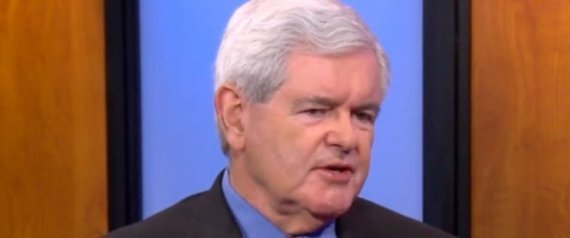
Newt Gingrich Discusses Potential Obama Impeachment

Newt Gingrich Discusses Potential Obama Impeachment 

Newt Gingrich Doma

02/25/11 06:42 PM


Former Speaker of the House Newt Gingrich said Friday that President Obama had overstepped his constitutional authority with his recent decision to order his administration to stop defending the Defense of Marriage Act. While the move didn't immediately open Obama up to impeachment, Gingrich claimed, it did raise his worry about a future constitutional crisis.

In an interview with Newsmax, Gingrich characterized the president's latest announcement regarding DOMA, a law that allows states to not honor gay marriages, as "a dereliction of duty and a violation of his constitutional oath" that "cannot be allowed to stand."

On Wednesday, Attorney General Eric Holder said Obama had determined that his administration would no longer defend a law defining marriage as only between a man and a woman, but that it would continue to be enforced pending an actual legislative overturn.

Gingrich on Friday said that this plan of action was unacceptable.

"He swore an oath on the Bible to become president that he would uphold the Constitution and enforce the laws of the United States," Gingrich said. "He is not a one-person Supreme Court. The idea that we now have the rule of Obama instead of the rule of law should frighten everybody."

While Obama was sheltered by the left, which "likes the policy," Gingrich claimed, he proposed another situation that he suggested would have caused much more clamor.

"Imagine that Governor Palin had become president," Gingrich said. "Imagine that she had announced that Roe versus Wade in her view was unconstitutional and therefore the United States government would no longer protect anyone's right to have an abortion because she personally had decided it should be changed. The news media would have gone crazy. The New York Times would have demanded her impeachment."

He then provided a potential legislative solution based on his belief that what the president was doing was unconstitutional.

"I believe the House Republicans next week should pass a resolution instructing the president to enforce the law and to obey his own constitutional oath, and they should say if he fails to do so that they will zero out [defund] the office of attorney general and take other steps as necessary until the president agrees to do his job," Gingrich said.

WATCH:

http://www.newsmax.com/video/viewid/8db50e8e-4c91-4fb5-9e39-3014ac1235a8

Entry #4,023

False Imprisonment Charges Dropped Against Nun

False Imprisonment Charges Dropped Against Eustis Nun


Posted: 10:51 am EST February 25, 2011

  Updated: 11:05 am EST February 25, 2011

WFTV.COM

 
TAVARES, Fla. -- Prosecutors on Friday announced that they have dropped charges against a nun accused of false imprisonment.


Laura Caballero, who also goes by the name Sister Mary, at the St. Filumena Church in Eustis, had been charged with false imprisonment after a family from South Carolina said they allowed her to take their little girl to deliver to another relative while they dealt with a family emergency. Instead, the Lake County Sheriff's Office said, at the time, she took 2-year-old Maria Lopez to Argentina and refused to give her back to her parents.


In a memorandum released Friday the State Attorney's Office said, "Based on the inconsistencies in the testimony of the parents, the falsification of the notary's application, jurisdiction issues, and the exclusion of the evidence collected during the search warrant, there is no reasonable likelihood of conviction at trial."


LINK TO VIDEO AND PREVIOUS STORY:

http://www.wftv.com/news/22417457/detail.html

Entry #4,020

Even GOP activists are turning against Sarah Palin

McClatchy Washington Bureau


Even GOP activists are turning against Sarah Palin


Steven Thomma | McClatchy Newspapers

last updated: February 24, 2011 07:05:31 PM


ROCK HILL, S.C. — As Sarah Palin wonders whether to run for president, she might want to talk to people in places such as South Carolina.

She'd find her star fading, and her prospects daunting.

Republicans still like her, but now they openly question whether she could or should be nominated for president, let alone elected.

At a recent gathering in South Carolina, the site of a crucial early presidential primary next year, party activists said the former Alaska governor didn't have the experience, the knowledge of issues or the ability to get beyond folksy slang and bumper-sticker generalities that they think is needed to win and govern.

Many are shopping for someone else. They're looking at Rep. Michele Bachmann, R-Minn., for example, and seeing what they call a smarter, more experienced candidate who's equally as conservative.

"Sarah Palin with a brain," said Gail Moore, a Republican from Columbia.

While national polls show that Palin still would win the support of about one in five Republicans in a national face-off today for the nomination, she no longer can claim the dominant role she enjoyed when she burst out of the 2008 campaign as the undisputed star of the party. She's also losing ground quickly among independents, who hold the keys to the White House.

"Her major weakness is that she needs to bone up on how the government works," said Don Long, a retiree from Lake Wylie, S.C. "I don't know if she's done as much of that as she needs to."

Long was one of about 150 Republicans who showed up for a fundraising dinner of the York County Republican Party, where they ate barbecued pork sandwiches from Bats BBQ — "You'll love the way we rub your butt" — and talked presidential politics.

Many already had seen potential candidates in person, such as Mississippi Gov. Haley Barbour and former Minnesota Gov. Tim Pawlenty, and came this time to hear Bachmann.

In interviews, most volunteered criticism of Palin.

"I like Palin," said Joseph Kejr, a Republican from Rock Hill who works in information technology for a Christian ministry. However, he added, "she's not polished in national government. In terms of leadership, I don't know about her."

"I'm not a big Sarah Palin fan," said Joe Thompson of York, who manages a small business and is the president of the South Carolina District 5 Patriots, a group devoted to the Constitution and against big government spending, taxes and programs. "I like her ideas. I'm not sure she'd be able to manage a lot of things she'd have to handle as president."

"She's not really creative," said Swain Shepperd, a retiree from Rock Hill. "She just repeats what's already been said by others." 

Some said she hurt herself by quitting halfway through her term as governor of Alaska, robbing herself of a platform in government. 

That shortfall's become more glaring as party activists have cheered on people who are now governing and fighting to cut spending, such as Govs. Chris Christie in New Jersey, Nikki Haley in South Carolina, Rick Scott in Florida and Scott Walker in Wisconsin, as well as Republicans in the U.S. House of Representatives such as Bachmann.

Also, Palin could have problems beyond the party. Polls show that the more the American public has seen of Palin, the less they've liked her.

Since she lit up the national stage in the fall of 2008 as the party's plain-talking vice presidential nominee, the ranks of people who have favorable impressions of her have dropped and the number with an unfavorable impression has spiked.

A Gallup poll taken in September 2008, for example, found that 53 percent had favorable views of her and 28 percent held unfavorable views. Last month, the same poll found the numbers were almost reversed, 38-53.

Even worse for GOP activists, she looks weak against President Barack Obama, a crucial factor for Republicans yearning for a champion who can oust the Democrat from the White House.

A recent McClatchy-Marist poll found that Obama would trounce her by 56-30 percent if the election were held now.

That was by far the weakest among three big-name Republicans tested; Mitt Romney and Mike Huckabee each fared better against Obama. And it was considerably weaker than her standing just a month before, when she trailed Obama by 52-40 percent.

The key reason: She's lost support among independents, and she gets far less support from that swing bloc than the other two Republicans tested do.

It's been a surprising turn since 2008, said Lee Miringoff, the director of the Marist Institute for Public Opinion in New York, which conducts the McClatchy-Marist Poll. Despite a barrage of criticism of Palin by Democrats and the news media, she came out of the election looking as if she'd be the major force for the party's nomination.

"She doesn't appeal to the center, and she hasn't been trying to," Miringoff said.

"There's a general sense among Republicans that this is someone they like being part of the 2012 narrative," Miringoff said. "They don't mind her pushing the edge of the envelope on issues. But there's concern about electability, about polarization. They're not necessarily sure she should be the nominee."

Entry #4,018